
Is Chloe Wise Painting You, or Painting Herself?
I'll be honest with you: I went into Chloe Wise's Manhattan studio expecting to come out understanding her work better than when I walked in. That did not happen. And somehow, I think that's the point.
Chloe is best known for her hyper-real, darkly funny paintings and sculptures - lettuces that become chandeliers, bread that becomes handbags, women who are simultaneously themselves and not themselves. She invited us into her studio, which is also her home, and she is exactly what the work suggests she might be: warm, razor sharp, genuinely funny, and completely uninterested in giving you the tidy explanation you came for.
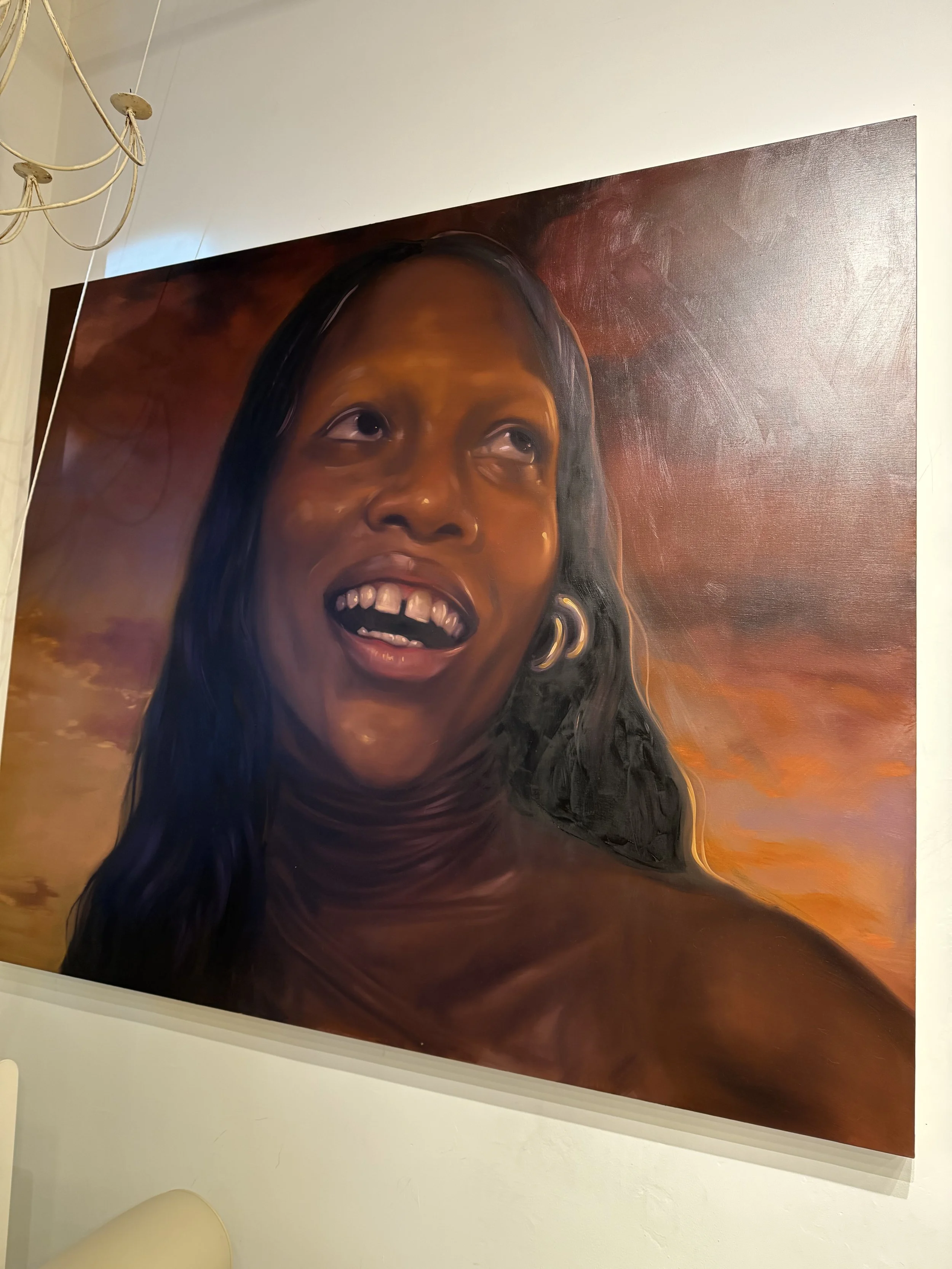
What I will say is that sitting in front of her paintings in person, you understand something the internet cannot show you. They're grittier than they photograph. There's more of her in them. The brushstroke is visible, the hand of the artist is right there, and that is entirely deliberate.
The Woman in the Painting
For a long time, Chloe has been painting portraits of people she knows - friends who generously sat for her or let her photograph them. But she's been loosening that grip on likeness lately, and it's producing something interesting.
"I'm using found images or using images of friends and letting go of the likeness aspect," she tells me. "Just using them as sort of archetypal women."
It's a shift from painting to capture someone to painting to paint. From the historical portrait tradition - the responsibility of making someone feel seen and represented - toward something freer. More about form, color, emotion. Moving to something more universal rather than specific.
She's still working through it, she says. She probably will be for the rest of her life.
The Reverse Ready-Made
When you start looking at the sculptures alongside the paintings, something clicks. Both are so representational, so defiantly clear - a lettuce chandelier is a lettuce chandelier, a woman holding Windex is a woman holding Windex. And yet neither is quite what it appears to be.
The sculptures started around 2012, and Chloe actually showed them before her paintings because they felt more finished at the time. She knew the paintings would keep improving - and she still believes they will - and so the sculpture was the springboard.
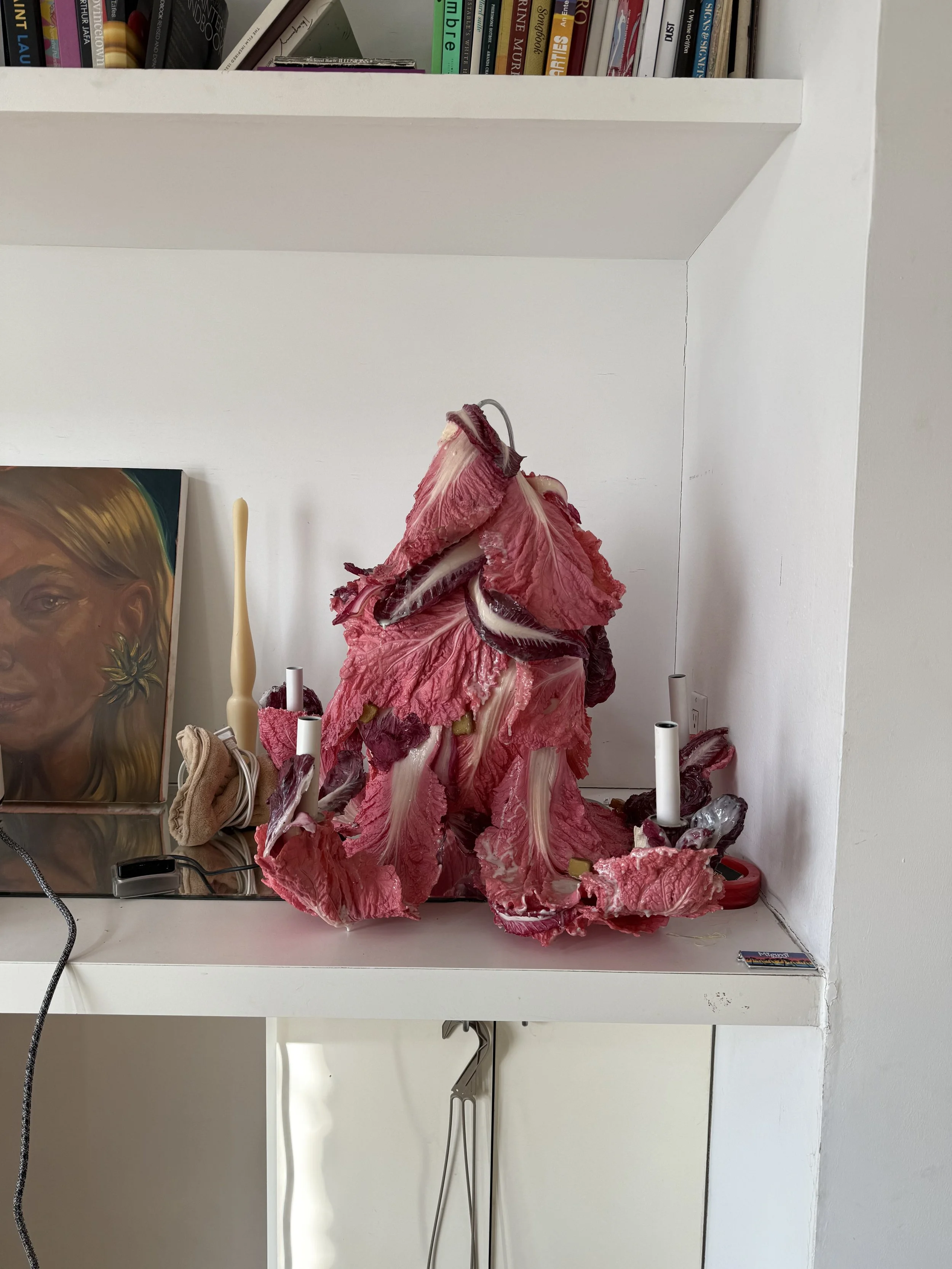
I got a bit giddy talking about the ready-made tradition, the Duchamp reversal of taking something functional and making it dysfunctional. Chloe pushed back, gently: "I think I'm doing a third thing. It's like taking something edible, making it functional and then making it inedible and dysfunctional."
Real marble, fake food. Hand-painted, but not edible. The substance that contributes value isn't the impressive part. Which is a statement about a lot of things, if you want it to be.
On Humor, Vulnerability, and Why It's Both
There's a lot of humor in Chloe's work - especially in the sculptures and video. I asked, plainly, whether humor is a way of deflecting vulnerability.
She didn't deflect the question. Instead she gave me an actual answer, which is rare.
"All vulnerability can be deflected by humor," she says. "And humor is how we deal with complicated, difficult subject matter." She traces it back to biology - laughter as the diffusion of aggression, the creator of group connection. And then she lands somewhere I found useful: what seems critical or satirical in her work is also a celebration. Equal parts loving a character, being that character, and interrogating what's wrong with it.
"I don't think I'm a really critical, dark person," she says. "I'm Canadian. I'm in a good mood generally, even in a bad mood."
The Instagram Question
I'm going to say what I think: reducing Chloe Wise's success to Instagram is reductive, and I've always thought so. These paintings are slow. They take time. They reward looking. They are not content.
Chloe has come around to the same view, and now uses the platform almost exclusively to post final documentation of finished work. No fun and games. No behind-the-scenes. "There's something quite reductive and almost misogynistic about referring to women and their Instagram instead of the work that they produce."
That felt worth saying out loud.
What Does She Want the Work to Mean?
When I asked what she wants the body of work to stand for once she's gone, she resisted the clean answer.
"I want it to feel like me and whatever it is that I'm - whatever my perspective or point of view is, which I'll have to spend my whole life uncovering and figuring out."
She wants the work to be beautiful and funny and sad in equal measure. Because life is.
That's it. That's the mission. And I think I maybe understand it now, just not in the way I expected to.
Watch our full conversation on YouTube and listen wherever you get your podcasts.