
Noah Kahan: Does "everyone look happy in a photograph.”
by Carrie Scott
When Noah Kahan belts out “everyone looks happy in a photograph” on the “All Them Horses” track that’s just been released on his latest album “The Great Divide” I almost believe him.
He’s not entirely wrong. Pictures of people never show the depth of their angst, their interior emotional worlds, but by god, some photographers - like Patrick McCormack who shot the album artwork - do try. So, let’s talk about seasonal melancholy, landscape, memory, and rural identity in the folk aesthetic of Noah Kahan.
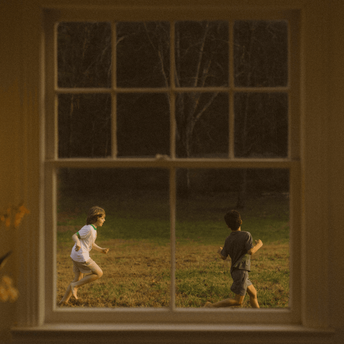
‘The Great Divide’. Photo: Patrick McCormack
Let’s be honest, this might just be my excuse to talk about how much I love Kahan’s latest album. It’s really just so wonderful. Songs that punch you in the gut. Lyrics that take you to the hardest moments of your own (w)reckoning. I love melancholy in music. It’s the way I lean, and Kahan leans in hard to it. I love him for letting us go here. We all do.
But what we haven’t talked about is how the visual language that has surrounded this latest release, particularly the photography by McCormack, is right there in that melancholy aesthetic, just as much as the music itself is. And it’s so great.
You see it immediately in McCormack’s album cover image. Two kids, mid-run, cut across a pale, dried-out field. The grass is aging. The forest darkening at the edge of the yard. The light is unmistakably New England: soft, low, and a little unforgiving. It doesn’t flatter, and yet it almost spotlights one boy, small in the frame, almost swallowed by the aging paint on the window frame, almost lost to the darkening edge of the forest, almost gone.
And you don’t know if they are playing? Escaping? Chasing something? Or leaving something behind? Which is what got me. It’s the beautiful ambiguity. The image doesn’t give you the answers. Just a feeling. And that feeling is pronounced by a “Great Divide” between you and the subject. You are looking at these two kids, through a window. Filtered through dirty glass, slightly fogged, maybe scratched. And it kind of turns the outside world into memory before it’s even gone. The frame splits the image in two; inside and outside, past and present. And you’re not sure which side you’re on, which is exactly the point. Are you looking at a memory, or watching the present?
There are a few immediate art-historical resonances here. His photographs echo the atmospheric solitude of Todd Hido, those suburban exteriors soaked in loneliness and sodium light, but McCormack has transplanted that feeling into a distinctly New England pastoral like some of Joel Meyerowitz’s best work. The use of medium format, likely something akin to a Hasselblad with an 80mm Planar lens, imbues the images with a tactile nostalgia: soft edges, muted tonal transitions, a sense that time itself has been slowed just enough and memory fading just enough to ache. Like Hido, Meyerowitz and even William Eggelston before them, McCormack leans into loneliness, one that I think is distinctly American.
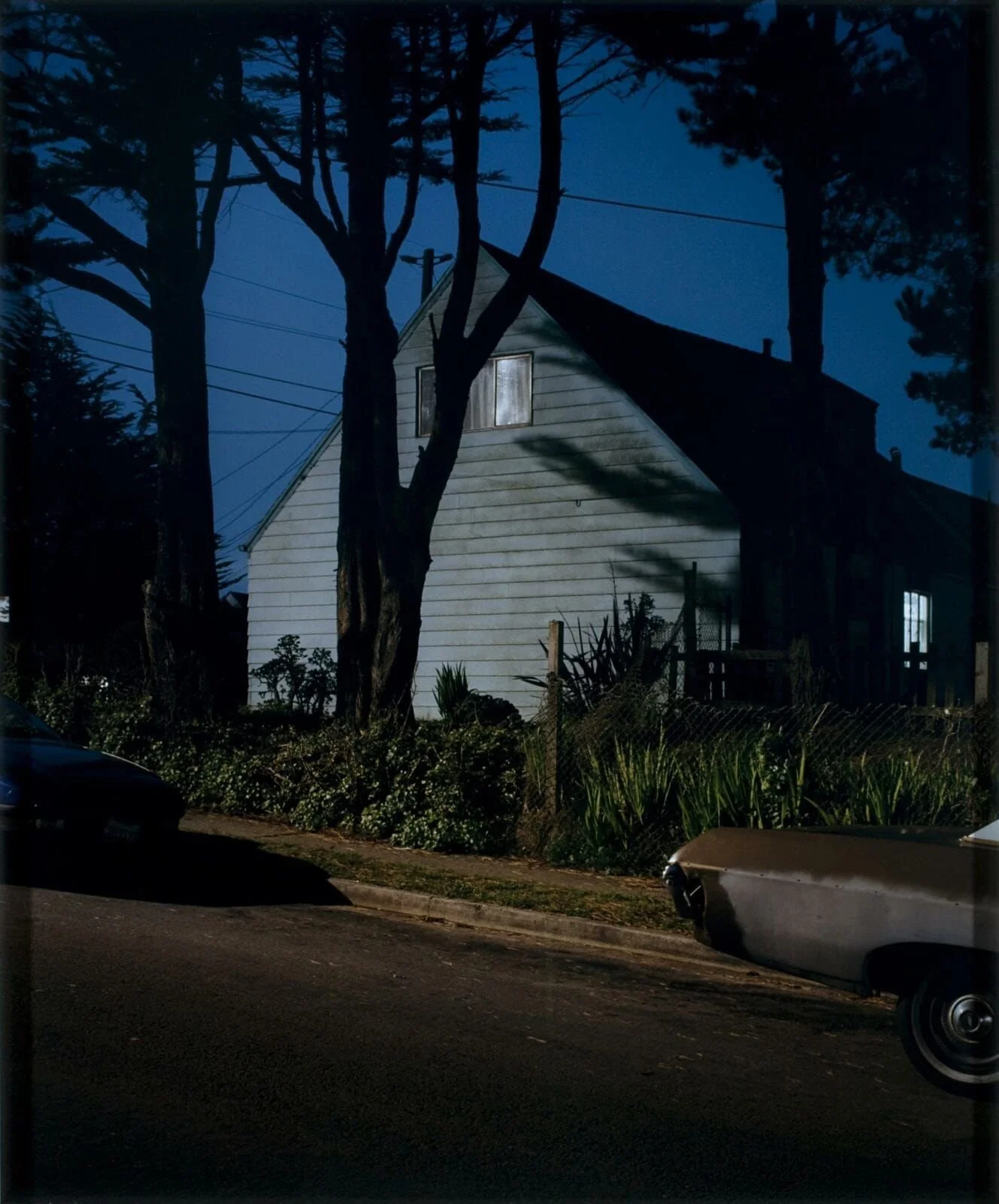
#2154-a, 1998. Todd Hido
These aren’t just landscapes, they’re emotional topographies. Spend some time on McCormack’s Instagram and website, and you will see how his images hold memory, and distance. And with Kahan’s music playing in the background, they hold the weight of growing up somewhere you can’t quite leave behind, the weight of growing up with a promise that never comes into fruition, but believing it just the same.
And that’s what Kahan’s music does too. It finds beauty in the place that shaped you, but that won’t ever let you forget what it cost. Those kids running? They’re really in the past, and the present simultaneously. They’re kids still trying to understand - like we all are - the weight of their past. And maybe still trying to outrun it.
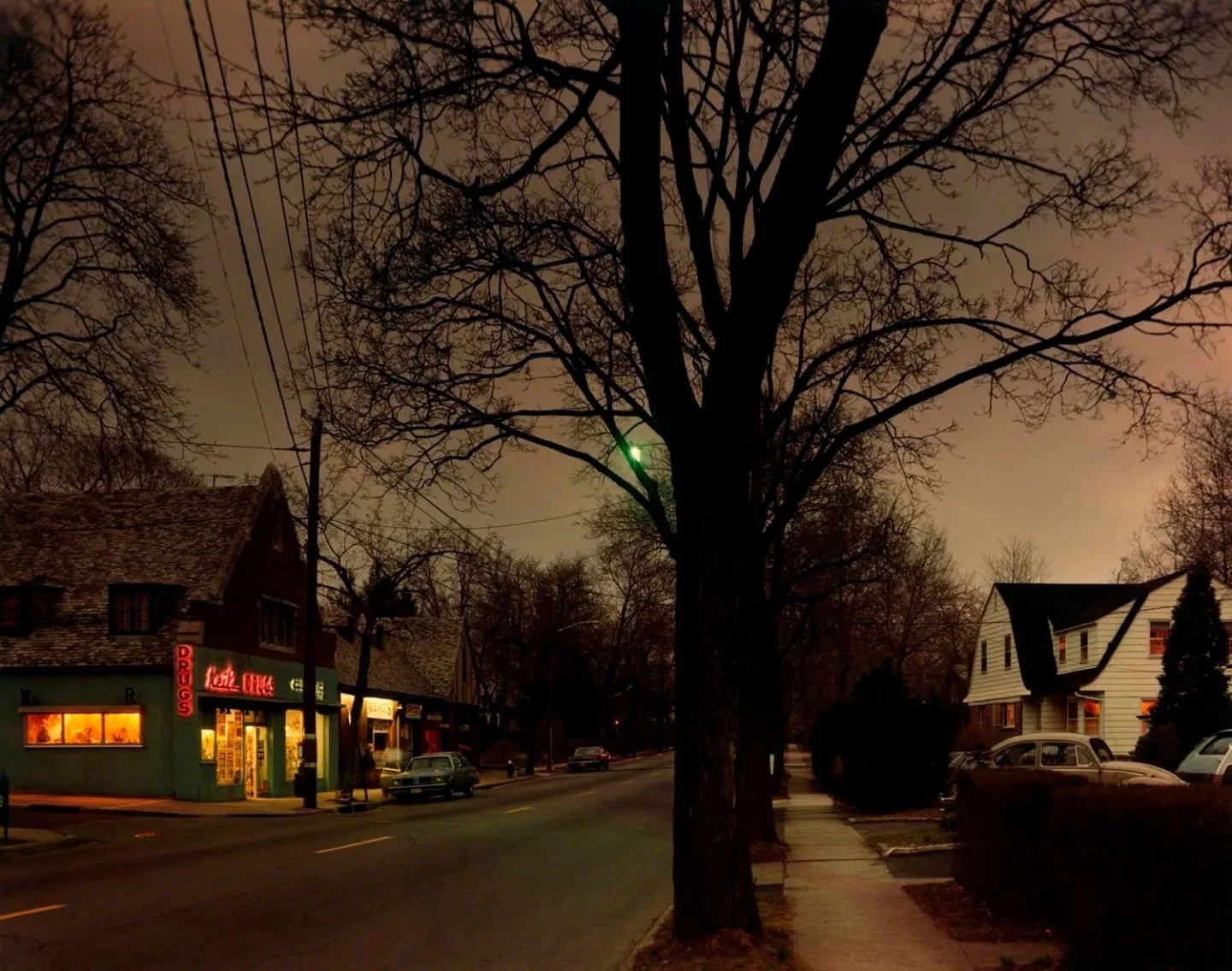
Joel Meyerowitz (American, b. 1938), Dusk. New Jersey, 1978, Archival pigment print. Collecció Pancho Saula i Michelle Ferrara / Galeria Alta, Andorra
I like how McCormack is elusive. It feels almost deliberately so. His online presence is stripped back to a single, functional line, “a portrait and landscape photographer based in Burlington, Vermont, available for commissions.” That’s pretty much it. That restraint mirrors the work. Images that refuse to over-explain, but capture the ambiguity and complexity of the portraits he’s creating. Like Kahan’s songwriting, these images operate in a liminal register. They feel like morning fog, not just visually, but emotionally translucent and unresolved. The portrait of those kids resist specificity. They open outward, inviting projection. These could be anyone’s children. Anyone’s memory. Anyone’s past.
The compositions across the album release often hinge on framing devices, windows, thresholds, edges of structures that subtly imply narrative without resolving it. The viewer becomes complicit, filling in the emotional gaps. We become part of the narrative. This is where the work aligns so precisely with Kahan’s music, both trade in suggestion rather than declaration, in feeling rather than fact.
There’s something deeply American in this visual-music dialogue, not in the mythic sense, but in its disillusionment. A mist-laden pastoral that hints at promise but never quite delivers it. The “rural idyll” is present, but worn thin. (Sidebar: I just did a whole exhibition about this with Maryam Eisler, Alexei Riboud and an epic archive of photographs of the American West taken from Howard Greenberg Gallery’s archive, so I’d be happy to talk about this till I am blue in the face. The myth of the American dream is the subject of so much great American photography). And so, what I see across McCormack’s project is a reckoning with emotional, geographical and generational inheritance.
Even the inclusion of children running and playing, suspended in time, feels loaded. They anchor the present moment while gesturing toward an uncertain future. The past lingers, unresolved; the future remains out of frame. What we’re left with is a fragile, fleeting now.
So I guess what I am saying is that the images do what Kahan’s songs do. They recognize the beauty and the fracture in where we come from. They don’t resolve that tension. They preserve it. And maybe that’s the point. We need to sit in the beauty of the fracture.
Bottom Line: As a photography collector, I’d like to be collecting McCormack’s prints, if he’s selling them. I don’t know if he is.