
The Joy Finder: Remembering Harold Feinstein Through the Eyes of His Wife and Archivist
Nine years of conversations distilled into one profound truth: Harold Feinstein didn't just photograph life—he taught people how to live it.
In our recent interview, Judith Thompson, Harold Feinstein's wife and the director of his archive, shared intimate insights into the life and legacy of a photographer whose work continues to captivate new audiences daily. Their story begins not with cameras and galleries, but with astrology, chance encounters, and a connection that would span decades.
Harold Feinstein’s Limited Estate Print Release
Limited Time Offer 14% Off
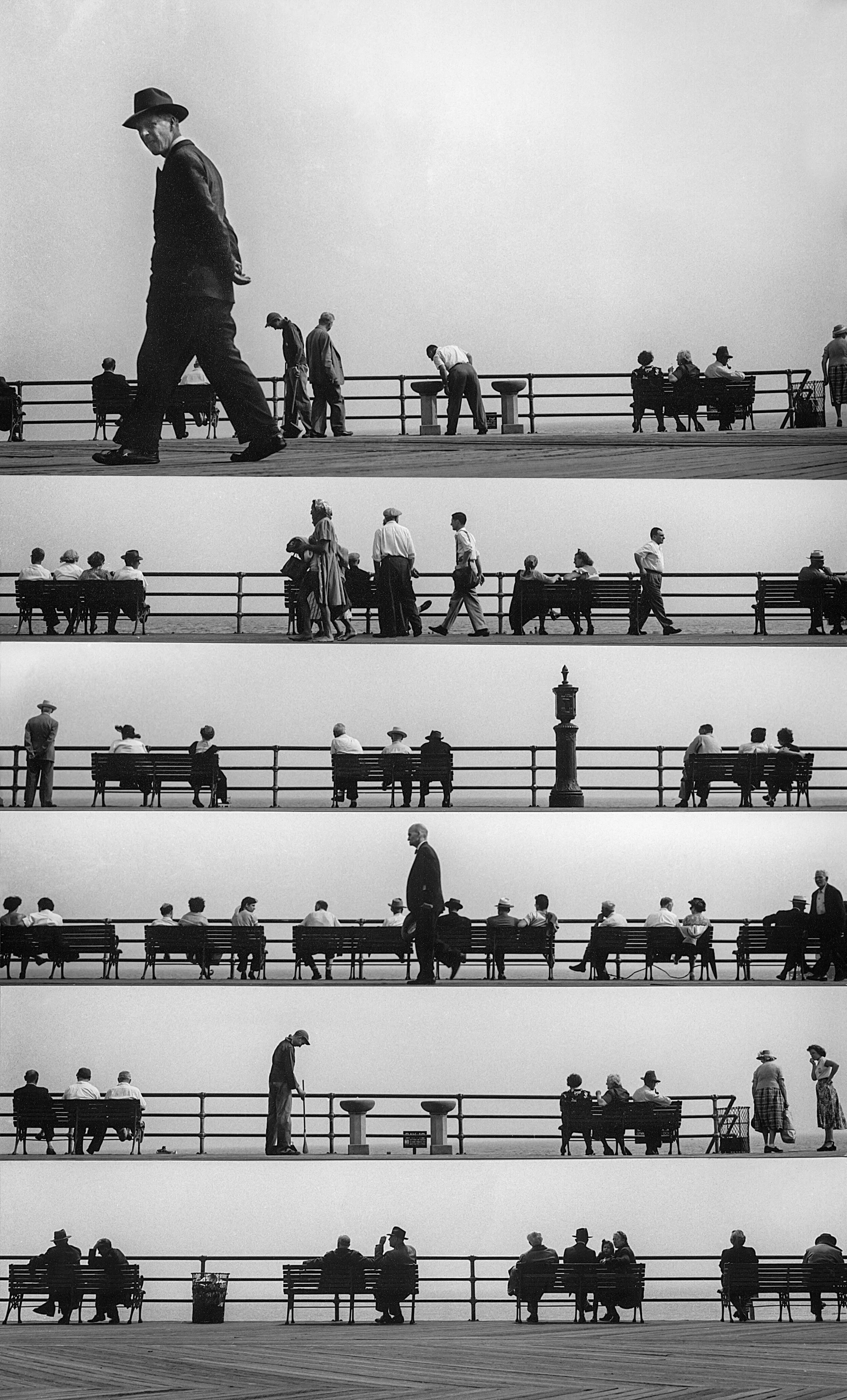
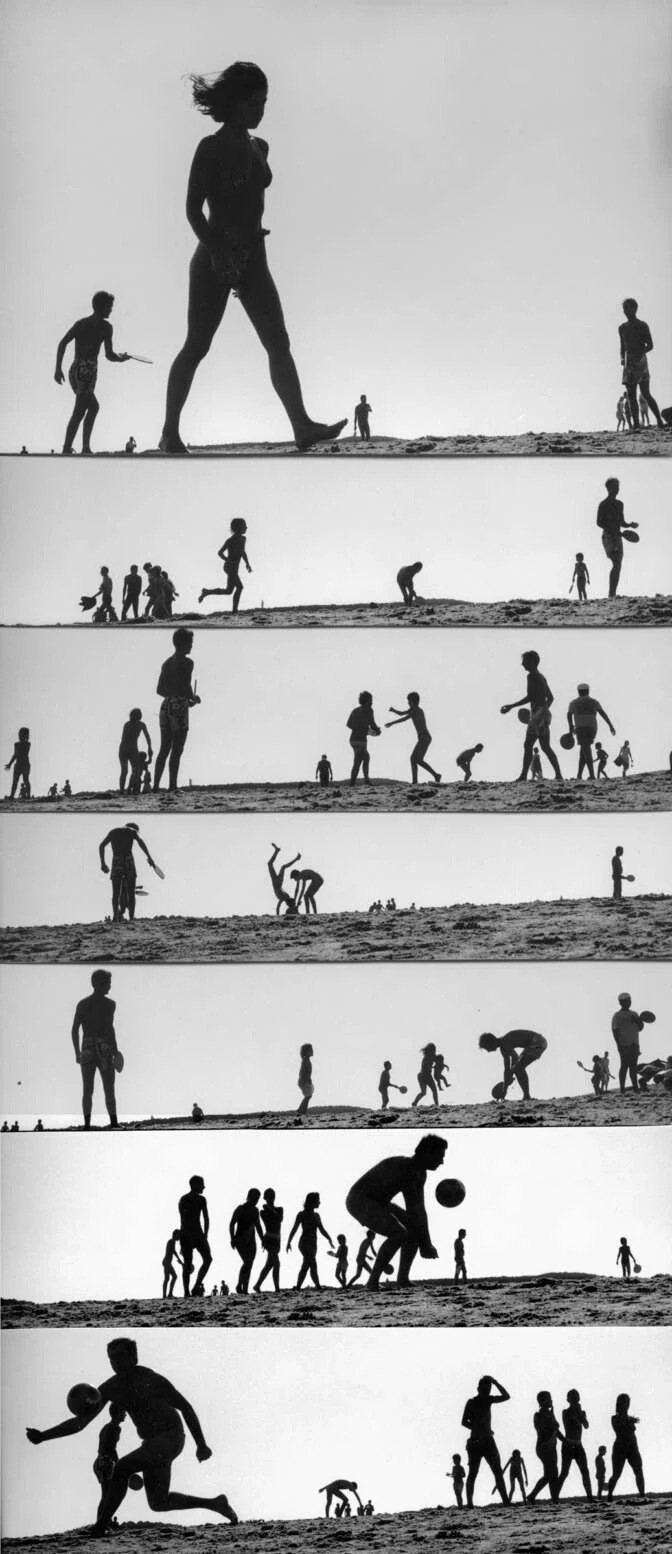
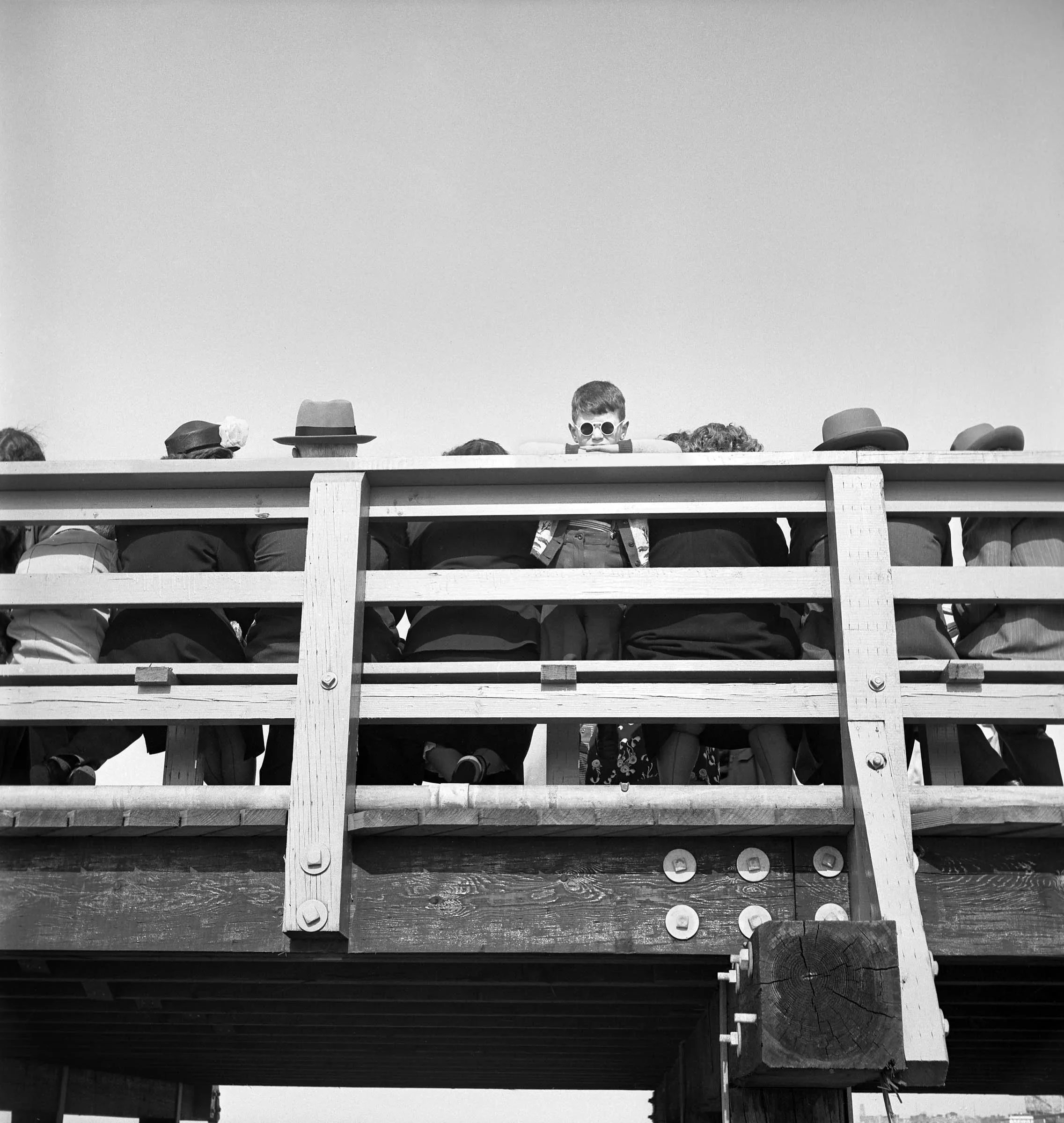
To mark the release of two newly authorised estate prints from the Harold Feinstein Trust—Boardwalk Sheet Music, Boy with Sunglasses, and Beach Montage—we’re offering a limited 14-day discount of 14% across all estate prints.
Boardwalk Sheet Music was the first estate print ever released by the Harold Feinstein Trust as it is one of Harold Feinstein’s most celebrated compositions: long sold out, widely published, and previously available only to a small group of collectors. The original signed editions have been unavailable for years. And the estate print is now down to the final stretch: only 5 prints remain in the edition, and just one is left at the £3,850 tier.
This estate-authorised print is issued in a strictly limited, tiered edition of 15. Prices increase as the edition sells out.
A Love Story That Almost Didn't Happen
In 1987, Judith met Harold at a gathering in New York. She was with someone else; he was taking a break from a relationship. They talked astrology—Harold read charts on the side—and exchanged birth data. Years later, through a twist of fate involving that same former boyfriend seeking an astrological reading, they reconnected. Harold recognized her chart, completed the reading over two sessions, and the rest became history.
"I fell in love with Harold," Judith recalls. Coming from a background in international peace work rather than the art world, she discovered his photography after falling for the man. "If you knew Harold and didn't know his work, so much of who he was in his persona and his way of being and what he cared about really was what you see in his work."
The Constant State of Discovery
What's remarkable about Harold Feinstein's work is its perpetual rediscovery. Nearly every day, someone new encounters his photographs and asks the inevitable question: "Why have I never heard of this guy before?"
The answer lies in Harold's approach. While his contemporaries in mid-century photography often focused on grit and harsh reality, Harold turned his lens toward something else entirely: joy. Not saccharine happiness, but genuine, profound appreciation for the ordinary made extraordinary.
His famous expression captures this philosophy perfectly: "When your mouth drops open, click the shutter." And people's mouths did drop open—at beach scenes, teenage faces, intimate family moments, and later in his career, flowers that he portrayed with the same reverence he'd shown human subjects.
The Man Behind the Camera
Living with Harold was an experience in itself. "Harold was bigger than life," Judith explains. "Everything about him was big." He embodied what Jungians call Puer Aeternus—the eternal child—with all the creative freedom and occasional chaos that implies.
But what defined him most was his generosity of spirit. "He was an appreciator," Judith shares. "He hardly ever gave a criticism to me about anything." This same quality extended to his students, whom he taught not just photography, but life itself.
Harold's teaching philosophy was radical for traditional educators. He refused to give grades, telling students upfront they'd all receive an A. His real mission was liberation—freeing people from boxes and expectations so they could discover their own creative voice.
"I don't care about being a teacher for you in photography," he would say. "The most important canvas is your life."
A Legacy Carefully Tended
After Harold's death in 2015, Judith faced the monumental task of preserving and promoting his legacy. Her advice to others in similar positions? "Understand that this is a lifelong commitment."
The archive's current pristine state didn't happen overnight. It resulted from years of systematic work, beginning even before Harold's passing: getting prints signed, establishing inventory systems, creating organizational structures that would outlast both of them.
Recent developments have been significant. The archive's placement with the Dolph Briscoe Center for American History affirms Harold's position among the most accomplished recorders of the American experience. Plans are underway for a major retrospective and comprehensive book.
But Judith's most passionate project involves Harold's teaching materials—approximately 33 hours of video alongside extensive audio recordings. "There are just gems in there," she says. Harold taught technique and composition, but more importantly, he taught liberation of creativity itself.
The Gift That Keeps Giving
Former students still reach out from around the world, sharing how Harold wasn't just their photography teacher but their life teacher. One student now in Egypt wrote that Harold was "a life coach" who taught what it means to live a good life.
His key word was always "yes." Yes to what you love. Yes to experimentation. Yes to breaking molds. Don't listen to naysayers. Don't let anyone tell you something can't be done.
This philosophy extended beyond his own practice to everyone he encountered. "He had a need and a desire and the ability to share this kind of love of life," Judith reflects, "and particularly a desire to help everybody embrace their true creativity."
Finding Joy in Every Corner
Perhaps the most profound observation came when discussing what draws people to Harold's work. After considering technical mastery, composition, and that ineffable quality of beauty finding its way into his viewfinder, the answer crystallized: "He found joy in every corner, in every shot, and he gave it to us."
In an era when joy hasn't always been fashionable in art, Harold's work stands as a testament to appreciation, compassion, and the extraordinary nature of ordinary life. Whether photographing teenagers on Coney Island, a mother nestled with her child, or the delicate petals of a flower, he approached each subject with the same reverence.
"L'chaim"—to life—was his favorite expression, embodying his Yiddish upbringing. And life, in all its messy, beautiful, joyful complexity, was exactly what he gave back to the world through his lens.
Epilogue
Ten years after Harold's passing, Judith finds her appreciation for him continuing to grow. "I'm finding out more about who he was as a wise human being," she says. "It grows every day."
For those discovering Harold Feinstein's work for the first time, you're not just encountering photographs. You're meeting an invitation to see the world differently, to embrace your own creativity, and to remember that your life itself is your canvas.
As Harold might say: Yes. Just yes.
Learn more about Harold Feinstein's work and legacy, and watch Andy Dunn's documentary film about the photographer. The archive continues to share his work and teachings, ensuring that new generations can discover the joy he found in every frame.