Zanzibar is the most devastating show in London right now
Or, what happens when two artists trust each other completely.
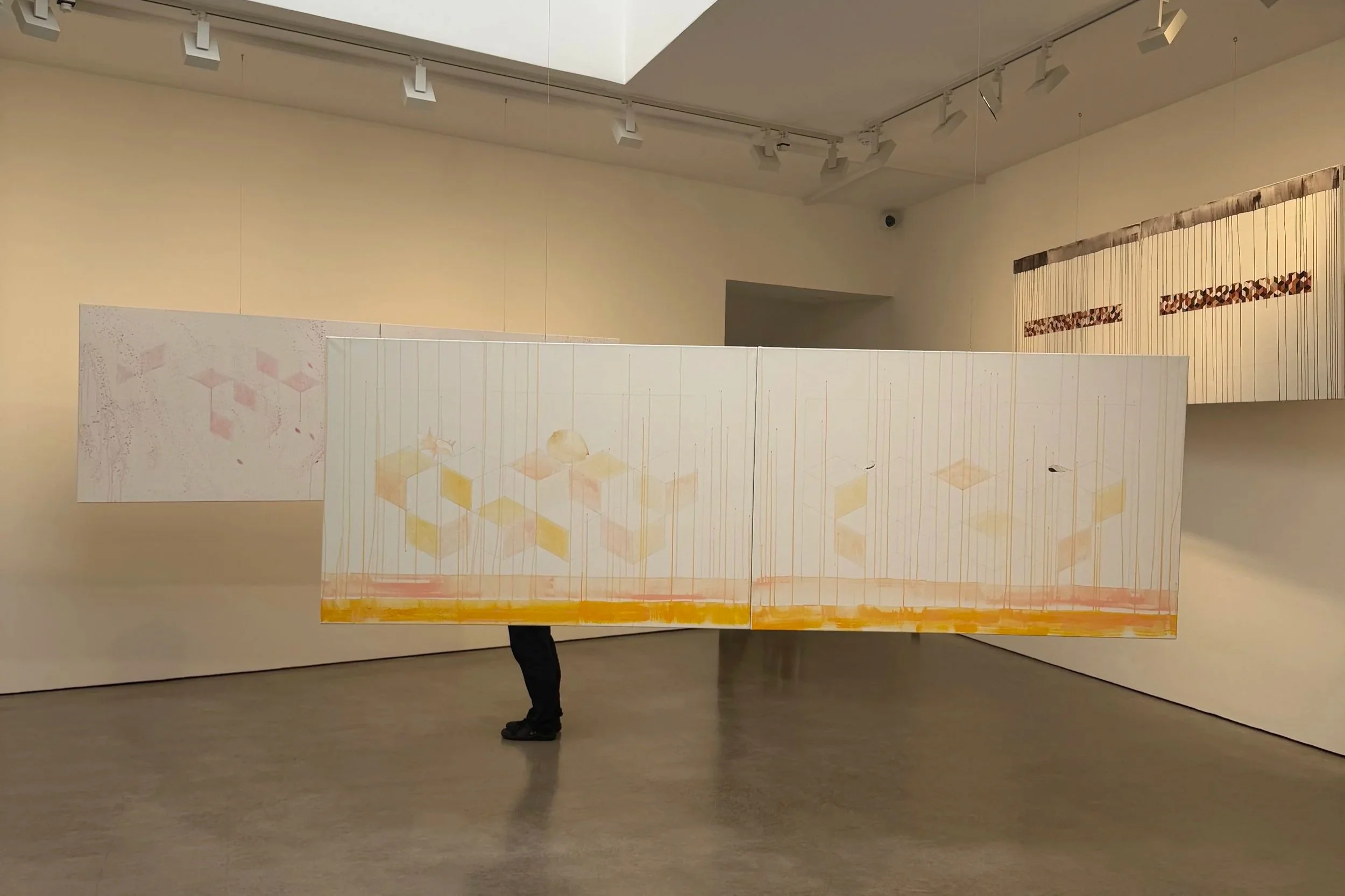
Lubaina Himid and Magda Stawarska – Zanzibar. Photo by Charlotte Hicks
I went to see Zanzibarat Lisson Gallery during London Gallery Weekend and I'm still thinking about it. That's not always the case with immersive installation shows, which can sometimes feel more like experiences designed to be photographed than actually felt. This was different.
The show is a collaboration between Lubaina Himid - Turner Prize winner, CBE, one of the most revered painters working in Britain today - and Magda Stawarska, a multidisciplinary artist whose practice centres on sound, memory and what she calls 'inner listening.' The two have been working together for nearly two decades. Zanzibar is perhaps the most personal projects they’ve worked on together.
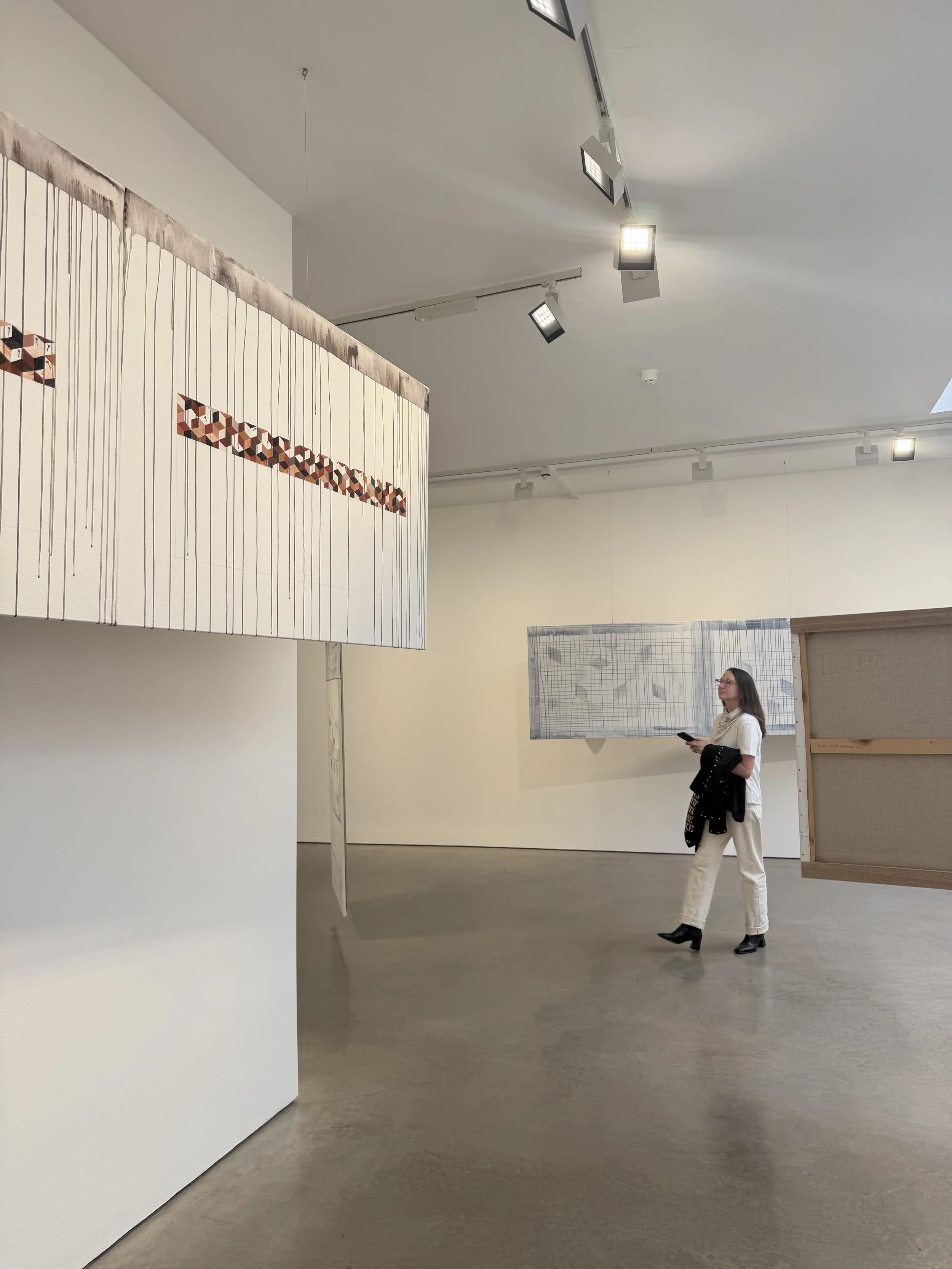
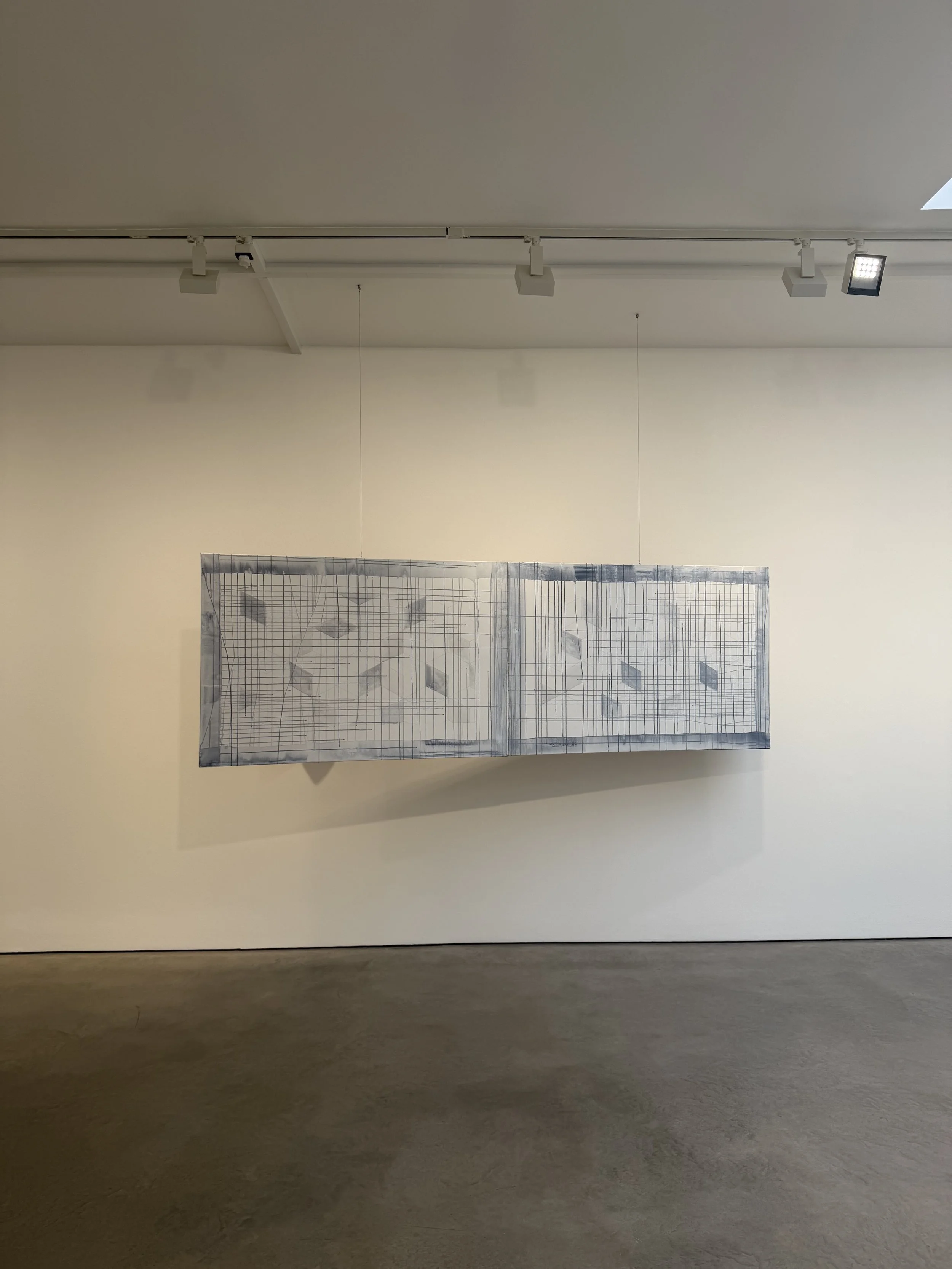
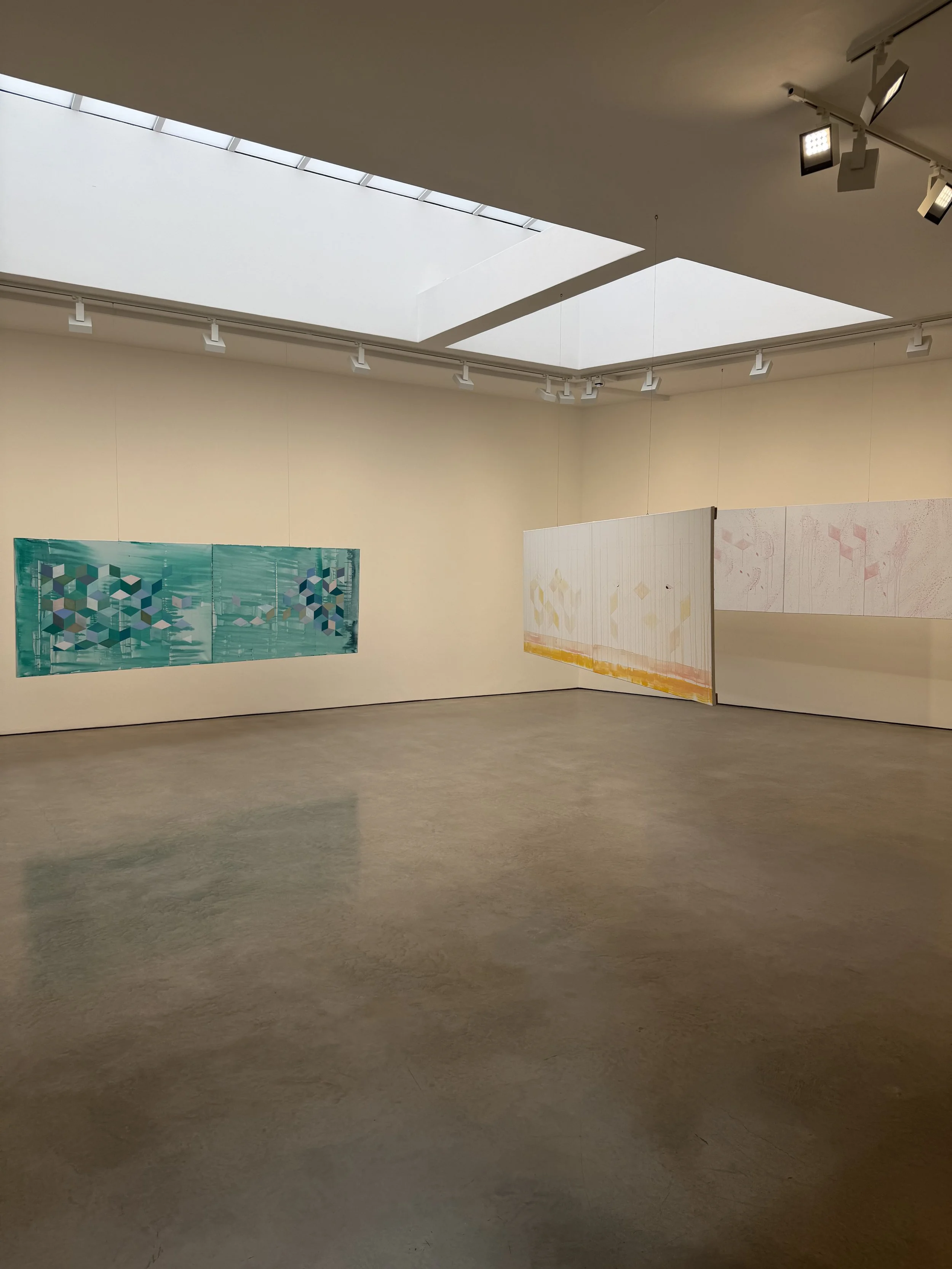
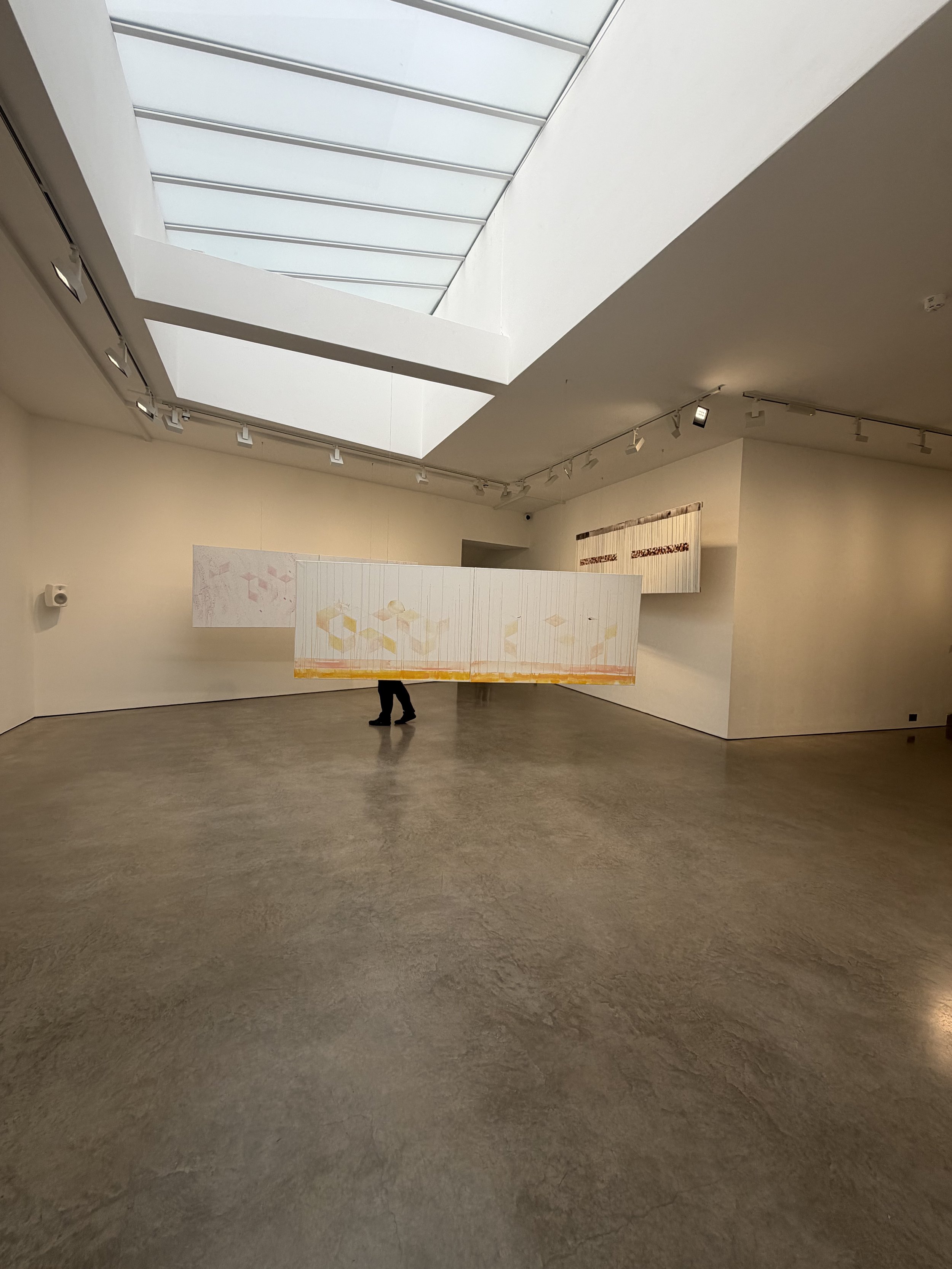
The work comprises nine diptych paintings by Himid, originally made in 1999, suspended away from the gallery walls so that you can walk around them. That detail matters. There's no safe distance from which to observe. You move through the paintings as much as you look at them. While you do, you're held inside an eight-channel sound piece composed by Stawarska in 2023 - a layered collage of Taraab music from Zanzibar, archival BBC radio clips, opera, Himid's own voice, and narrated passages from a guidebook given to Himid's mother by her father.
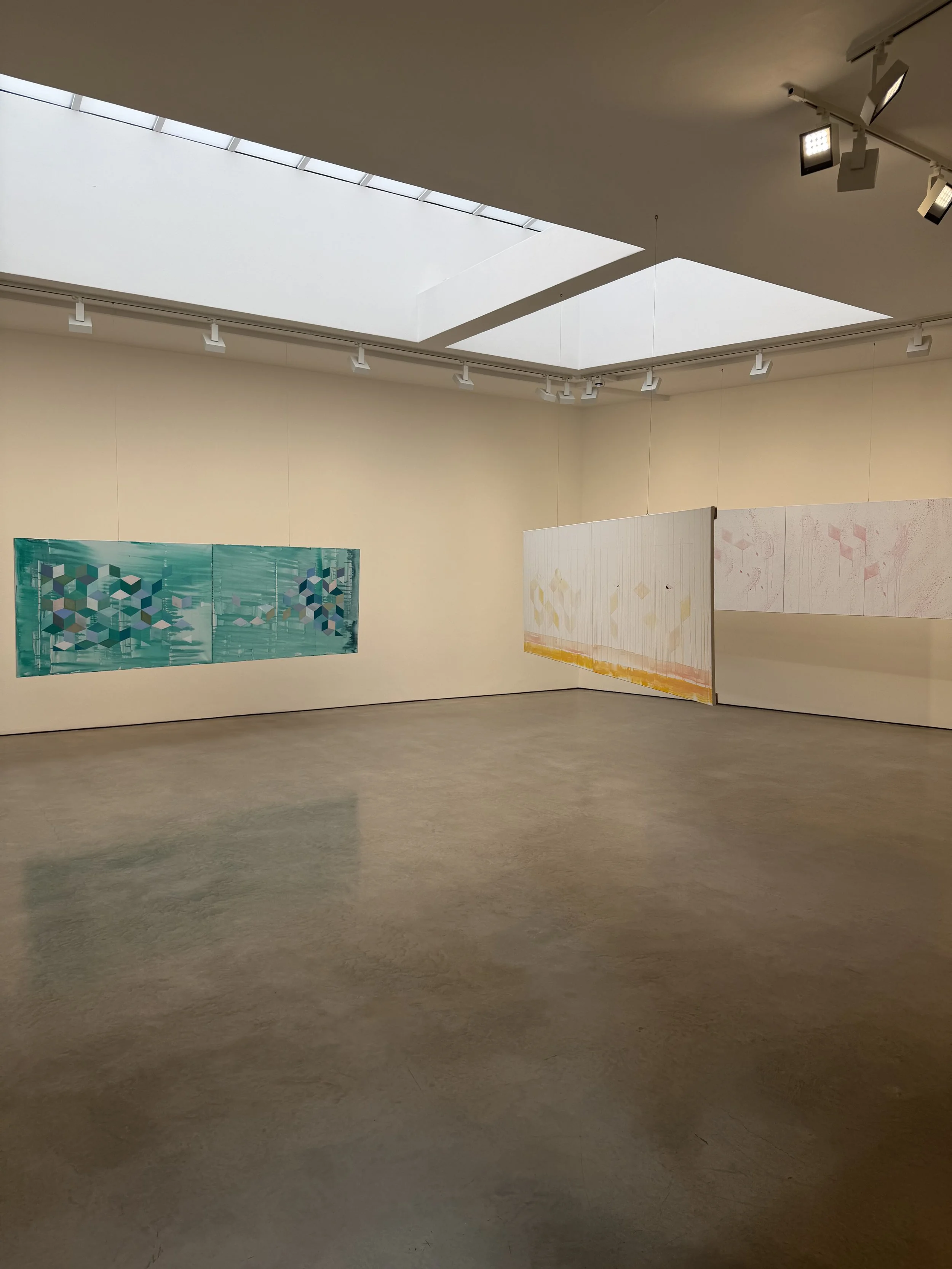
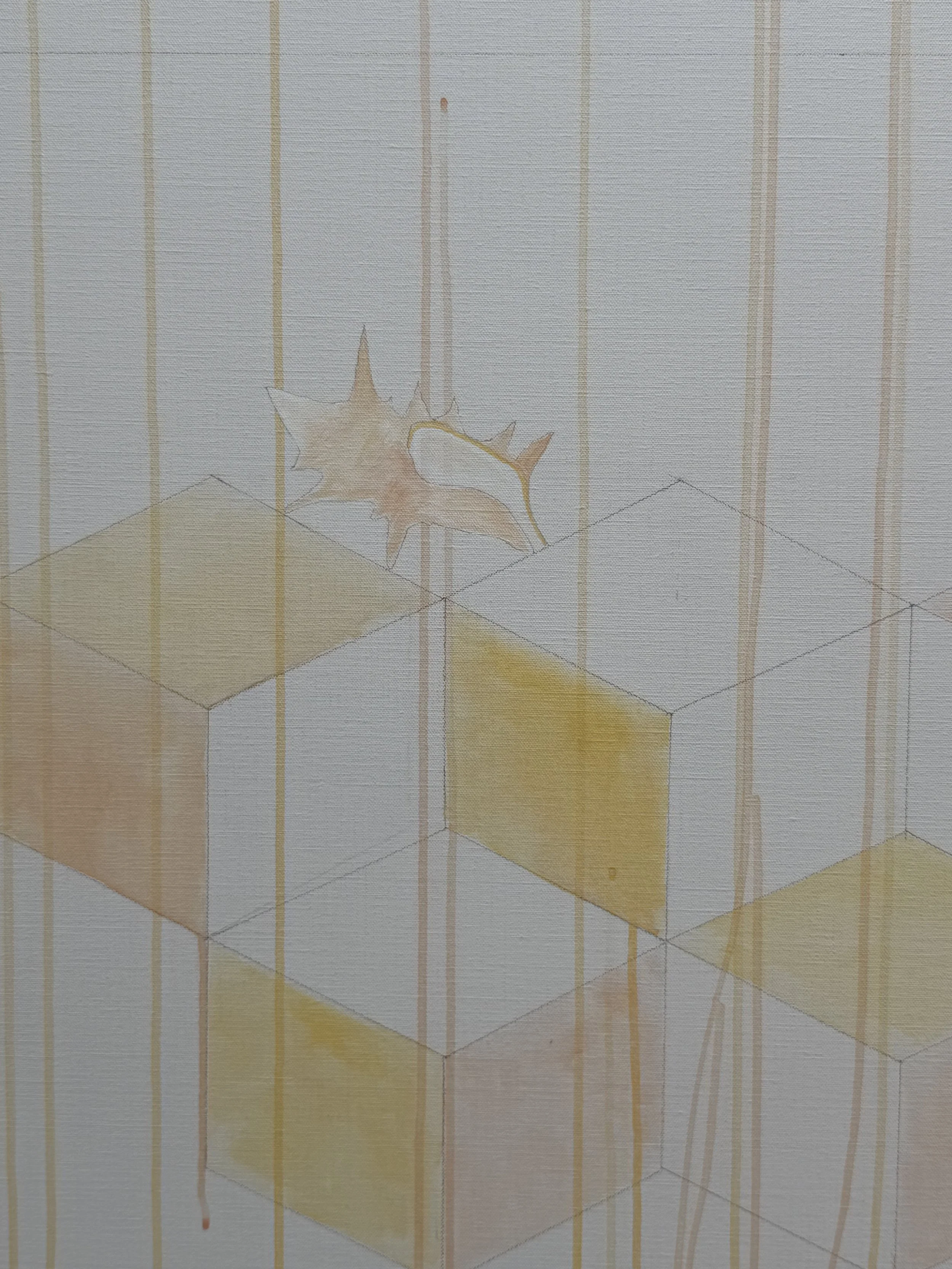
The paintings were made as a response to Zanzibar - the East African archipelago where Himid was born in 1954, and which she left as an infant after her father died at just 33. The works explore the emotions she experienced returning there as an adult: memories tangled up with grief, and shame, and guilt. She has said they are unlike anything she made before or since. Looking at them, you believe her. The paintings are predominantly abstract - colourful cuboid shapes and zig zag patterns, with drips of paint flowing up or down the canvas surface - punctured with recognisable forms such as nets, shells and closed shutters.
Stawarska's sound piece works as a call and response to Himid's paintings. She describes her process as "a meticulous choreography of technical layering", and for me it lifted the curtain to reveal to the viewer the intense emotions Himid was feeling and the references she was drawing on to make these paintings. The result is something that neither artist could have made alone, and both of them seem to know it. During the talk hosted by the Lisson Gallery, they spoke about how their individual practices have been shaped by what they've given and received from each other over the years - how much of their solo work, they believe, simply would not exist without this ongoing exchange.
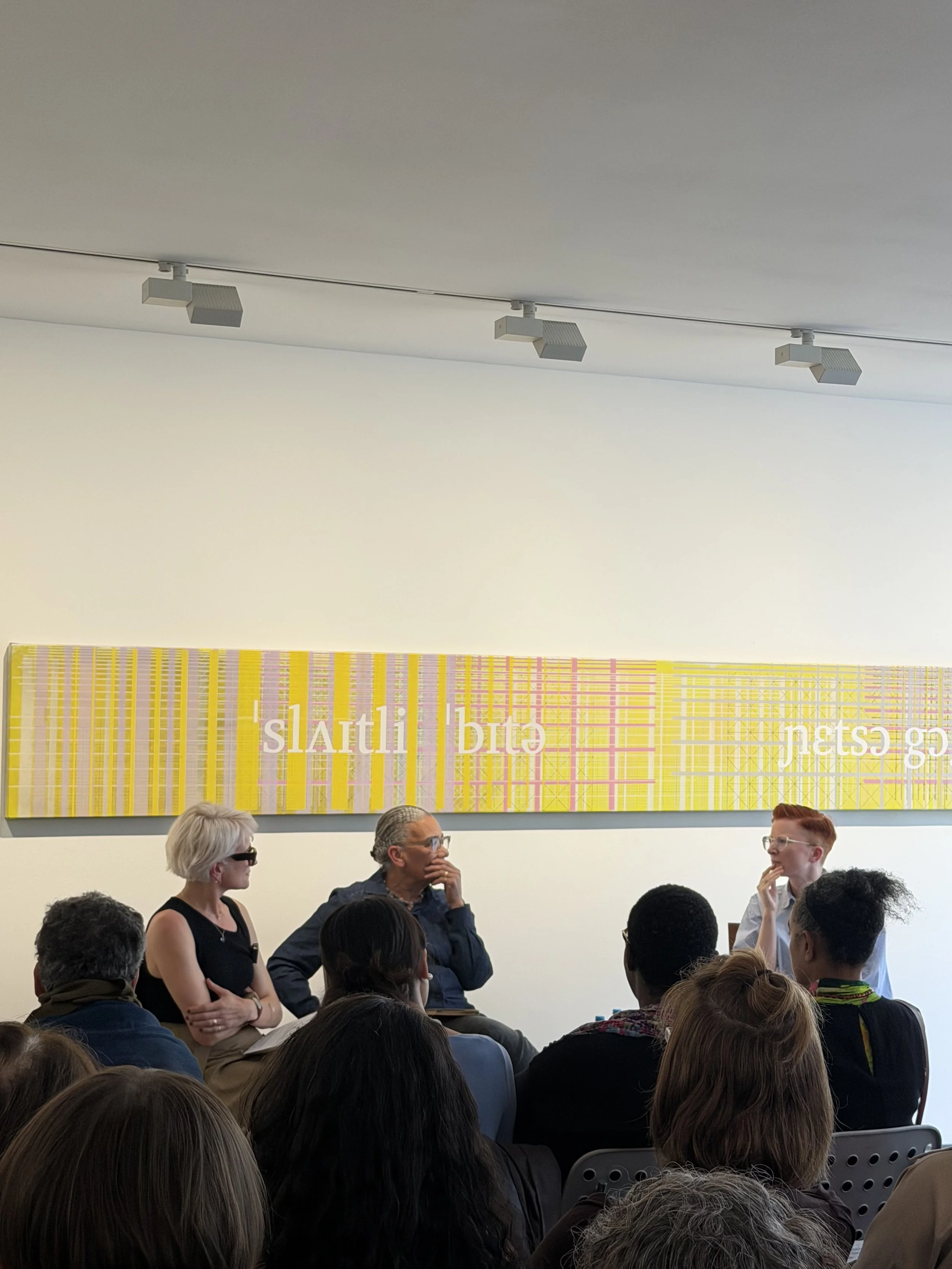
There is something remarkable about the nature of their collaboration. They were born twenty years apart, on different sides of the world - Himid in post-war Britain, Stawarska in communist Poland. But they've spoken about how those circumstances, as different as they seem, have given them a foundational understanding of each other that closes the gap entirely. They describe their working relationship not as compromise but as exchange - no one gives anything up, no one loses anything. Two different ways of working, brought into contact, making the whole more complete.
The paintings were hard for Himid to make. She's talked about needing BBC Radio 3 playing in the background just to get through the sessions, and about an initial reluctance or inability to explain the works to Stawarska when she was developing the sound piece. There was, she's said, a lot of trust involved. Looking at Zanzibar, you can feel it - the trust that made this work possible, and the generosity on both sides that allowed it to exist at all.
What strikes me most, stepping back from the installation, is what it demonstrates about what we gain as viewers when artists let go of control and ego. There's a kind of art that is definitively one person's vision, and there's great value in that. But there's also something irreplaceable about work made in genuine exchange - where two sensibilities meet and produce something that belongs entirely to neither, and to both.
Zanzibar is one of those things. Go and see it.
Zanzibar is on at Lisson Gallery, 67 Lisson Street, London, until 5 September 2026.