
This year, I read through hundreds of applications for the Seen Mentor Prize. Every application reminded me of just how much talent is out there, waiting to be found. Not waiting to be discovered in the romantic, accidental sense. Waiting because the art world doesn't make it easy to get seen, even when the work is genuinely good.
The ten artists featured here are the finalists from this year's prize. They work across photography, painting, and sculpture. They're based in London, Manchester, California, Switzerland, and beyond. What they have in common isn't medium or geography — it's a clarity of vision, a seriousness of purpose, and work that stops you in your tracks when you actually look at it.
These are emerging artists worth knowing about now, before the rest of the world catches up. Scroll through, explore their practices, and save the ones that stay with you.
-Carrie
Want art in your inbox? Join our newsletter.
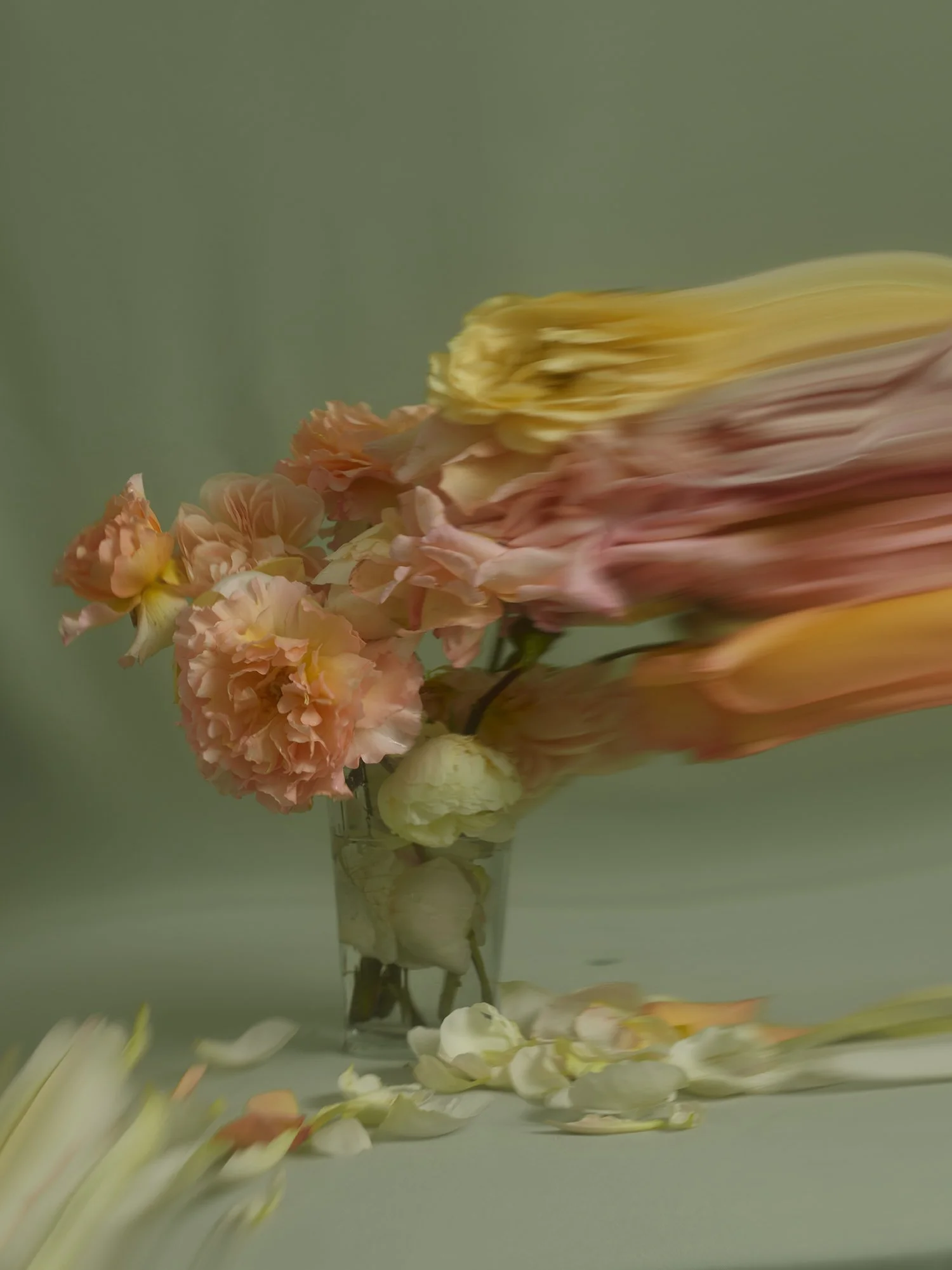
Andrea Zvadova
Andrea Zvadova is a photographer from Slovakia based in London. Her work sits between minimalism and emotional subtlety, exploring unconventional beauty through bold colour, playfulness, and sensitivity. Andrea focuses on detail, often filling the frame, particularly in beauty work where skin texture is highlighted and hair is transformed into abstract forms.
A key project, PIGMENT, is a series of portraits of people with albinism. Through minimalist, intimate imagery, Andrea emphasizes their unique beauty while addressing stigma and social invisibility. The work conveys both strength and quiet resilience, using close-ups to reflect both physical realities and broader societal perceptions.
During the pandemic, her focus shifted from fashion to more introspective themes, including floral still lifes. Inspired by traditional forms, she reinterprets them through in-camera techniques, exploring distortion and abstraction. In her Peonies series, water droplets reshape flowers into surreal, miniature worlds. Another series reimagines the “English rose,” challenging conventional ideas of beauty and encouraging deeper reflection on identity and perception.
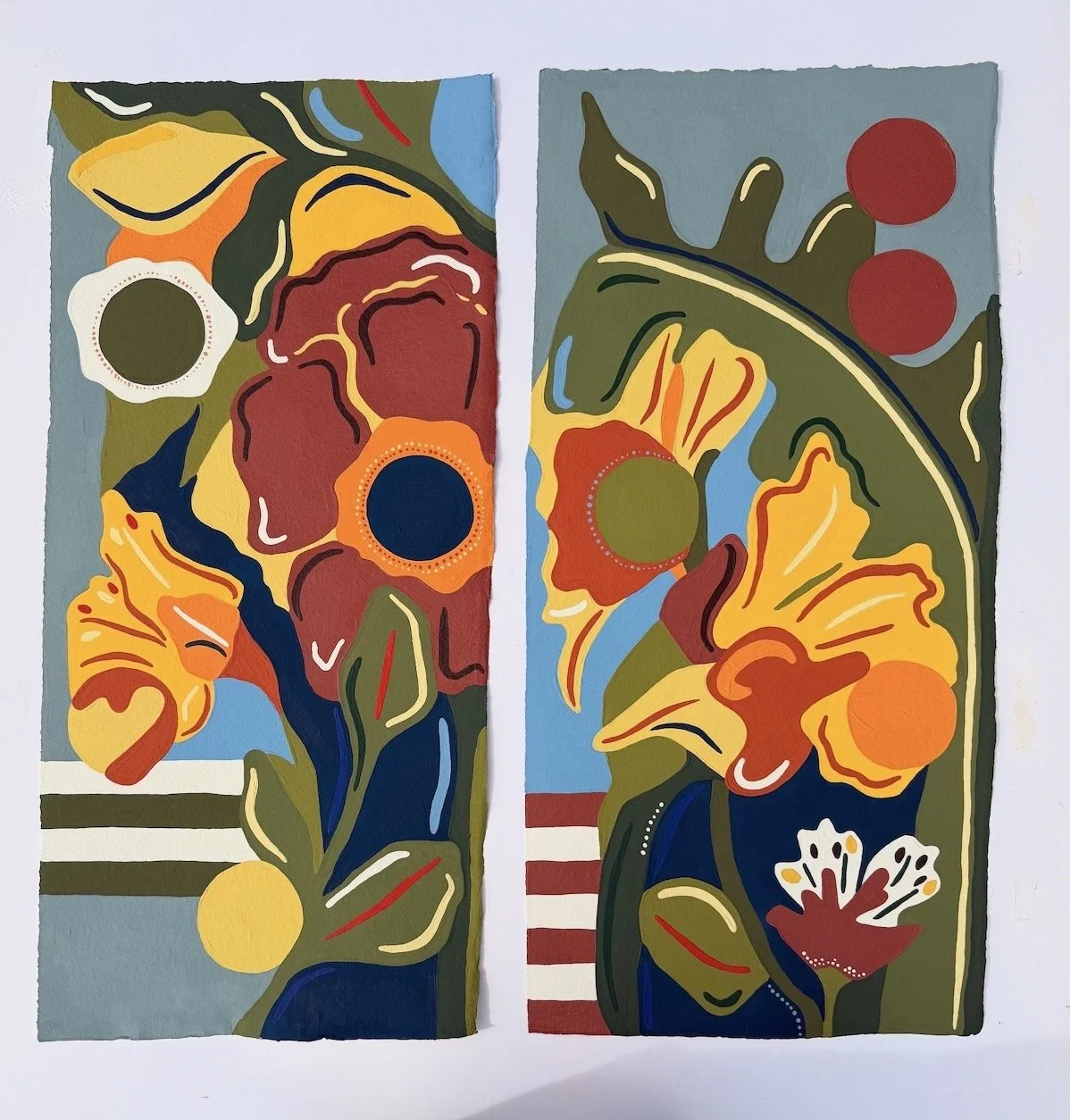
Celia Martine Picking
Celia’s practice explores the fine line between observation and interpretation. As an artist primarily working from her home studio, she explores the interplay between interior and exterior worlds, focusing on plants and florals, birds, and modern still life. These subjects often evoke memories of home and holidays, weaving nostalgic moments into her work
She translates these forms onto rag cotton paper, beginning with a loose pencil sketch and circles. Celia’s sketch around the circles, allowing some elements to appear first and then create the final composition. She then paints several layers in each section, creating a natural wall between the colours. The thick paint gives a flat, strong colour that allows her to add small details, to create highlights and patterns.Through her art, Celia invites viewers to celebrate happiness and bring colour and joy into their homes.
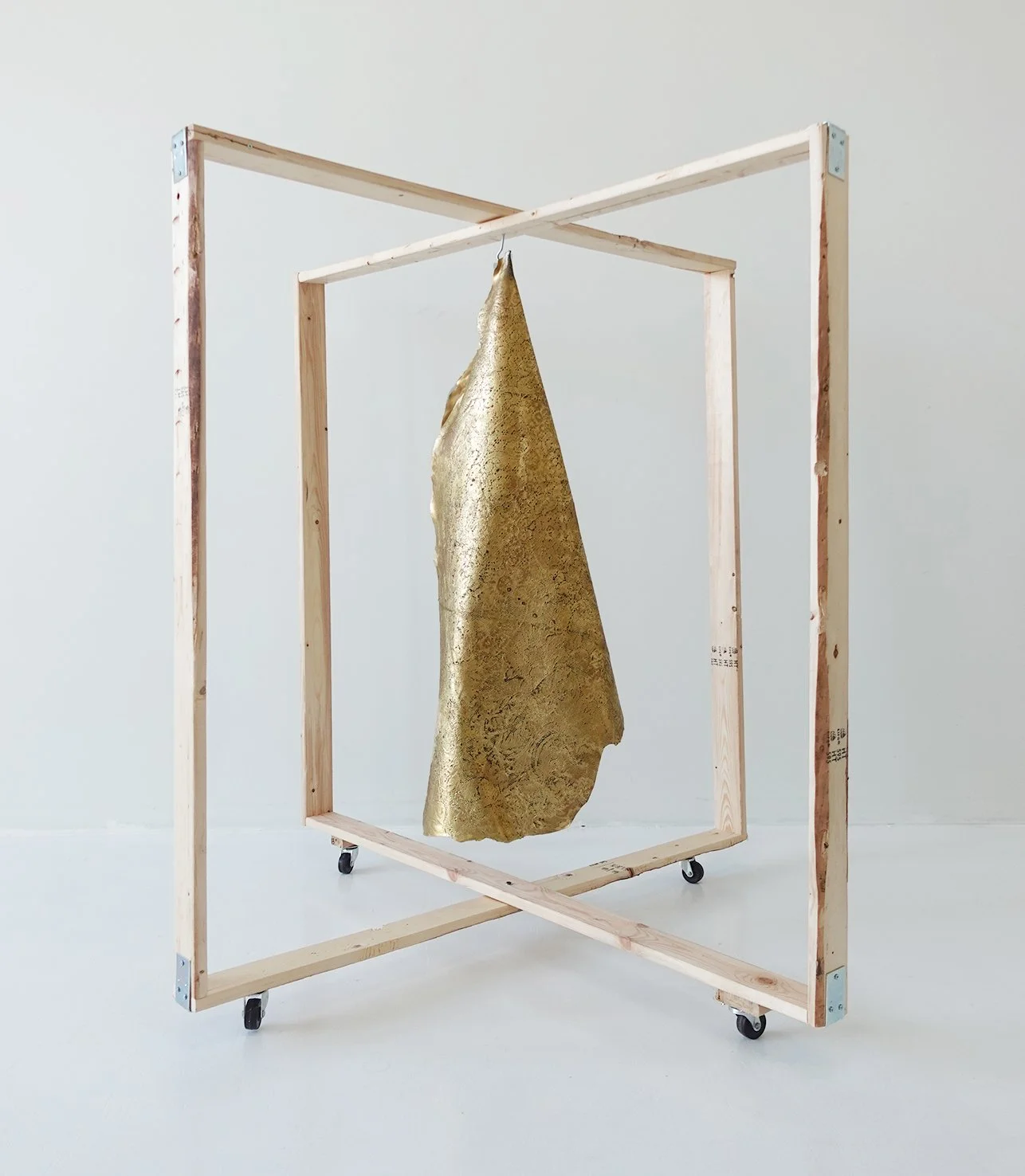
Elizabeth Waggett
Working with oil paint, precious metals, light, and found textiles, Elizabeth creates detailed and physically demanding paintings shaped through processes of slowness, repetition, pressure, and care. Her relationship to labour is deeply connected to the industrial and maker history of her hometown of Manchester, UK, where skilled repetitive work produced objects of beauty and value often inaccessible to those who made them.
Elizabeth is interested in the hidden labour embedded within opulence, and in the tension between refinement and extraction, preservation and decay. Gold, silver, zinc, textiles, and oil paint become active participants within the work, oxidizing, shifting, and resisting permanence as they absorb time, pressure, and touch. Drawing from the visual language of classical still life painting, ornament, and domestic craft traditions, she uses materials and motifs historically associated with femininity, such as lace, flowers, and decorative surfaces, as records of labour, survival, and cultural memory rather than passive beauty.
Central to her practice is an interest in the hand: the evidence of physical effort, repetition, and care embedded within a surface. Having lived across multiple countries and cultures, her work is also shaped by displacement, reinvention, and shifting ideas of home. Across painting, metal, and textile, Elizabeth is interested in how surfaces hold emotional residue, and how what is scarred, altered, or unstable can often carry greater reverence and emotional weight than what remains untouched.
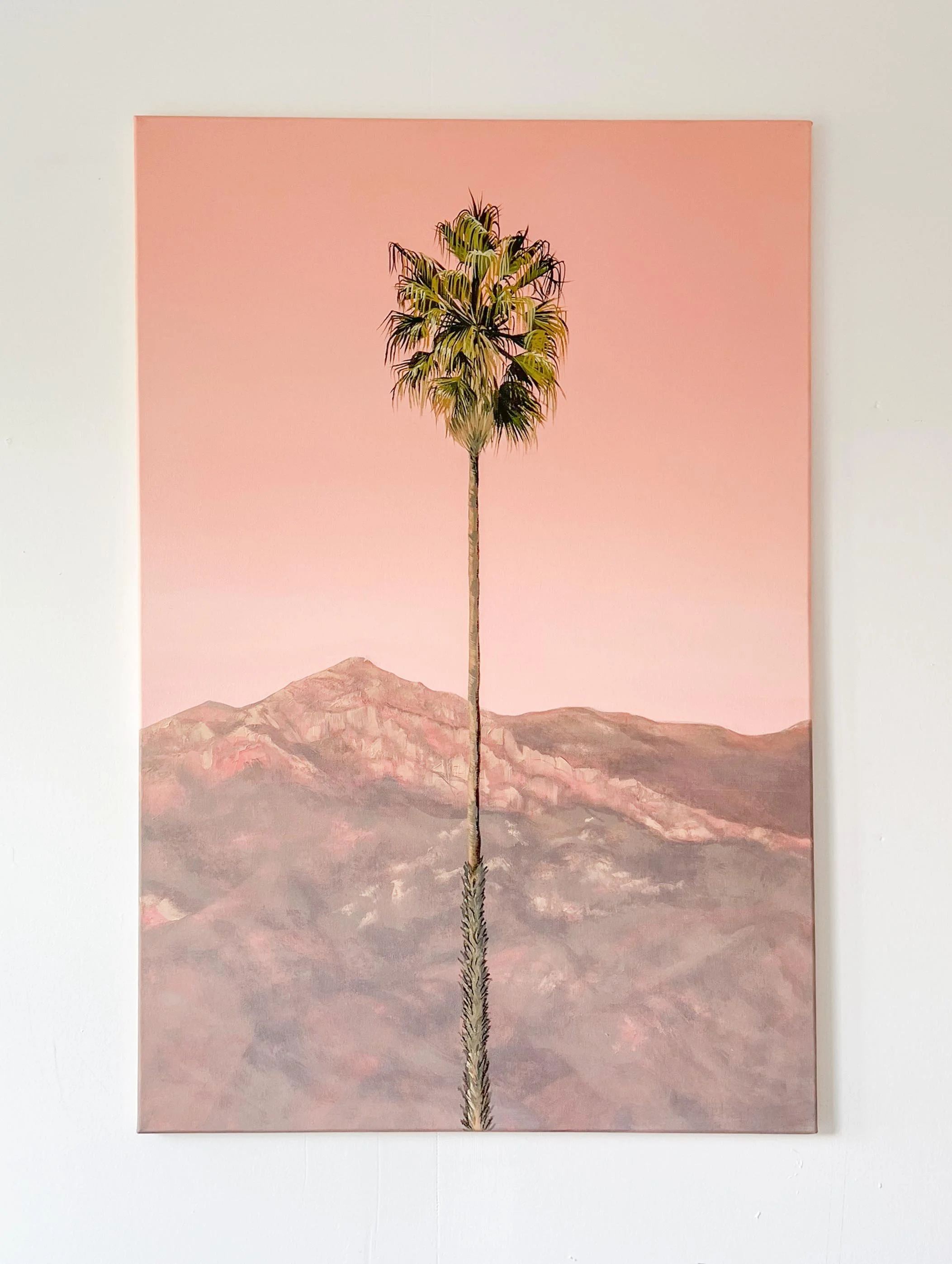
Hilary Brock
Hilary paints to create space - for stillness, for breath, for beauty. Her work is rooted in the landscapes of California, especially the coastal light and quiet expanses of Santa Barbara and the Santa Ynez Valley. She is drawn to the places that offer a sense of rest, where the land and light seem to hold a kind of deep peace. Through layered oil washes and a soft, atmospheric palette, she translates that feeling onto the canvas. Hilary came back to painting after years in a demanding corporate world, and now understands her work as an offering - something both grounded and contemplative. She hopes it gives others what it’s given her: a return to calm, a sense of presence, and a deeper connection to place.
Jasmine Mansbridge
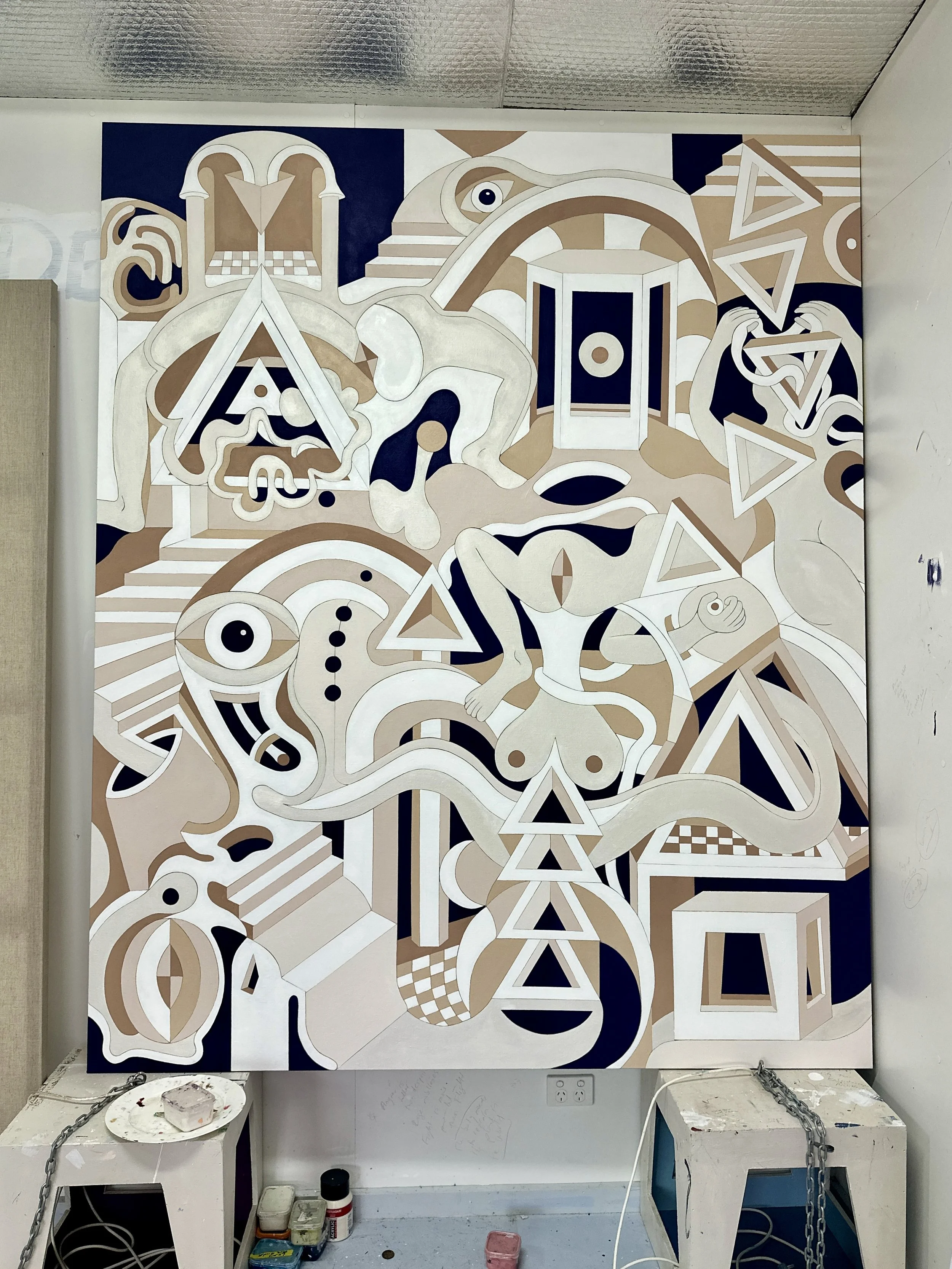
Geometry is the holding together of chaos. Mansbridge’s work bridges the tangible and the metaphysical, transforming complex ideas about identity, connection, and existence into striking visual forms. Her practice, rooted in the traditions of Neo-geo art, draws on the precise geometry of minimalism, the boldness of pop art, and the illusionistic depth of op art. These influences, combined with a deeply personal exploration of spirituality, result in work that feels both intimate and universal. At its core, Jasmine’s art is about navigating the spaces between—between the self and the world, the physical and the spiritual, humanity and nature. Her meticulously crafted sculptures, installations, and paintings serve as portals, inviting viewers to reflect on their place in the cosmos and the barriers, both internal and external, that shape their reality.
Kate Ballis
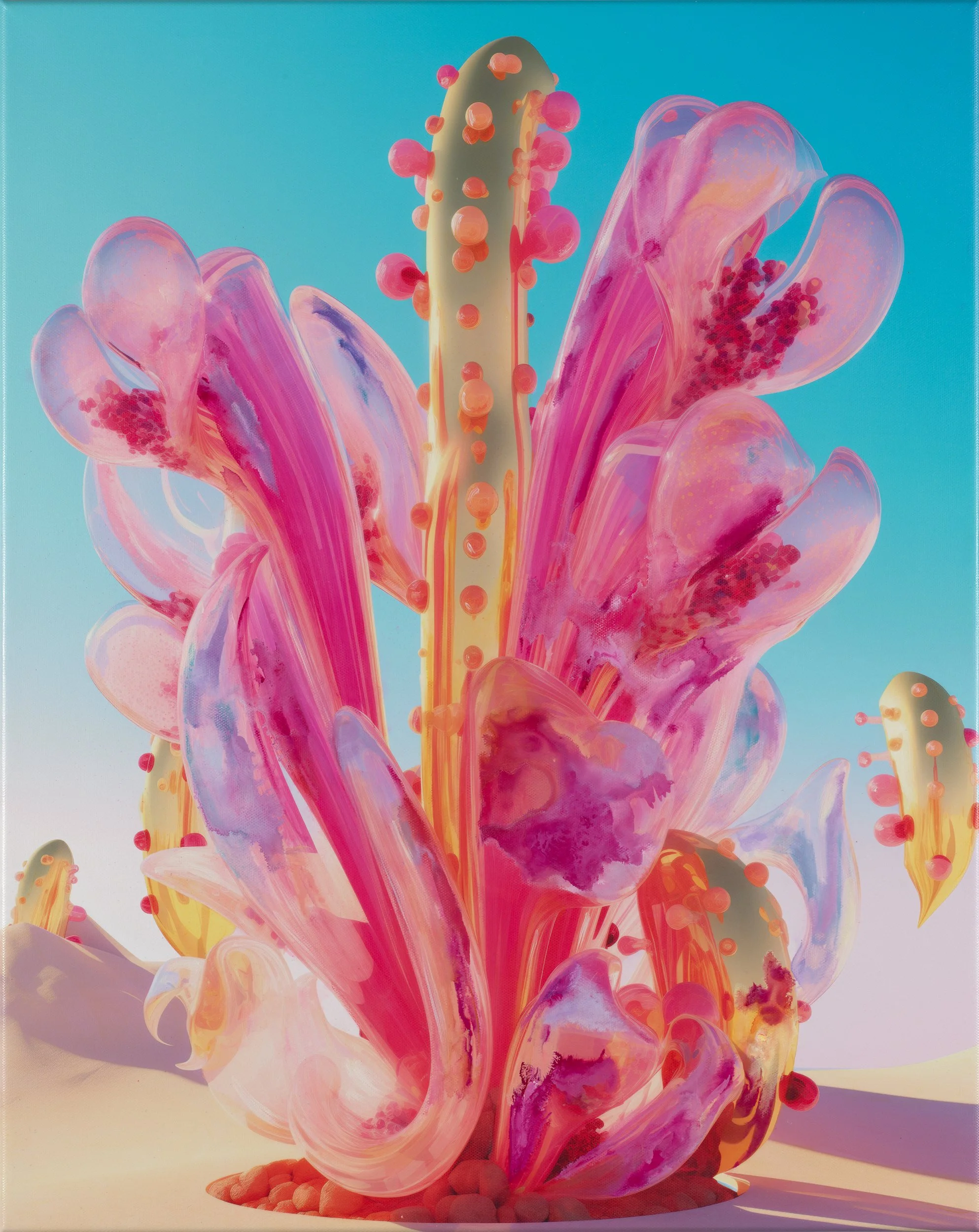
In Future Flora, Kate explores how nature spirits and the human hand can intervene in a process of digital creation and destruction to make the intangible, such as energy, spirit, and plant vitality, visually tangible. Her process is rooted in re-imagining the desert landscapes she has visited over 16 years of photography, filtering them through a surreal lens to create unconventional, glitched architectures.
These synthetic origins serve merely as a vessel, a hollow scaffolding waiting for spirit to enter. Painting becomes a ritual of remembering. Through brushwork, water, and pigment, Kate reconnects to the land that inspired the original vision.
Ultimately, this series is about desert life blooming and pulsating, where surreal flora reclaims the landscape with a life of its own.
Lulu MacDonald
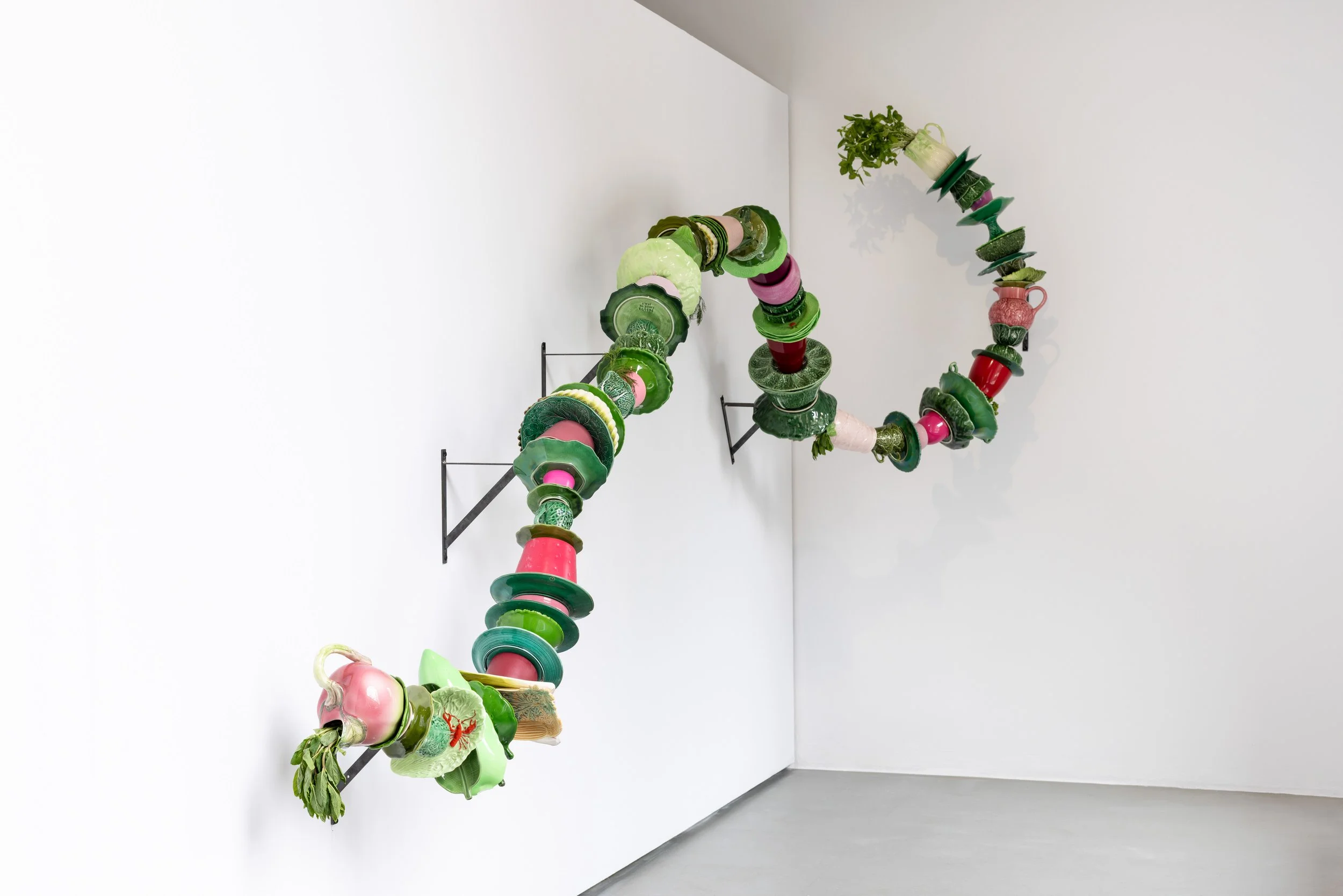
Lulu’s work explores the space between function and dysfunction, using that unstable ground to build sculpture. It hones in on the decorative as a site where the work exceeds both. She draws on stories, hearsay, and rumours from Jersey, where she grew up.
These narratives begin a process of connection, holding the anxiety she lives with. They are not fixed; they shift, fragment, and recur across the work. The installations operate like staged environments created out of collecting objects which linger or which she feels tender towards.
The sculptures act as performers, holding tension between dependence and autonomy. They engage themes of love and loss, migration and ecology, without resolving them. She is interested in how objects hold conflicting states at once: use and failure, care and neglect, belonging and displacement. Poignantly, she is not trying to resolve this. She is trying to keep it there.
Maya Rochat
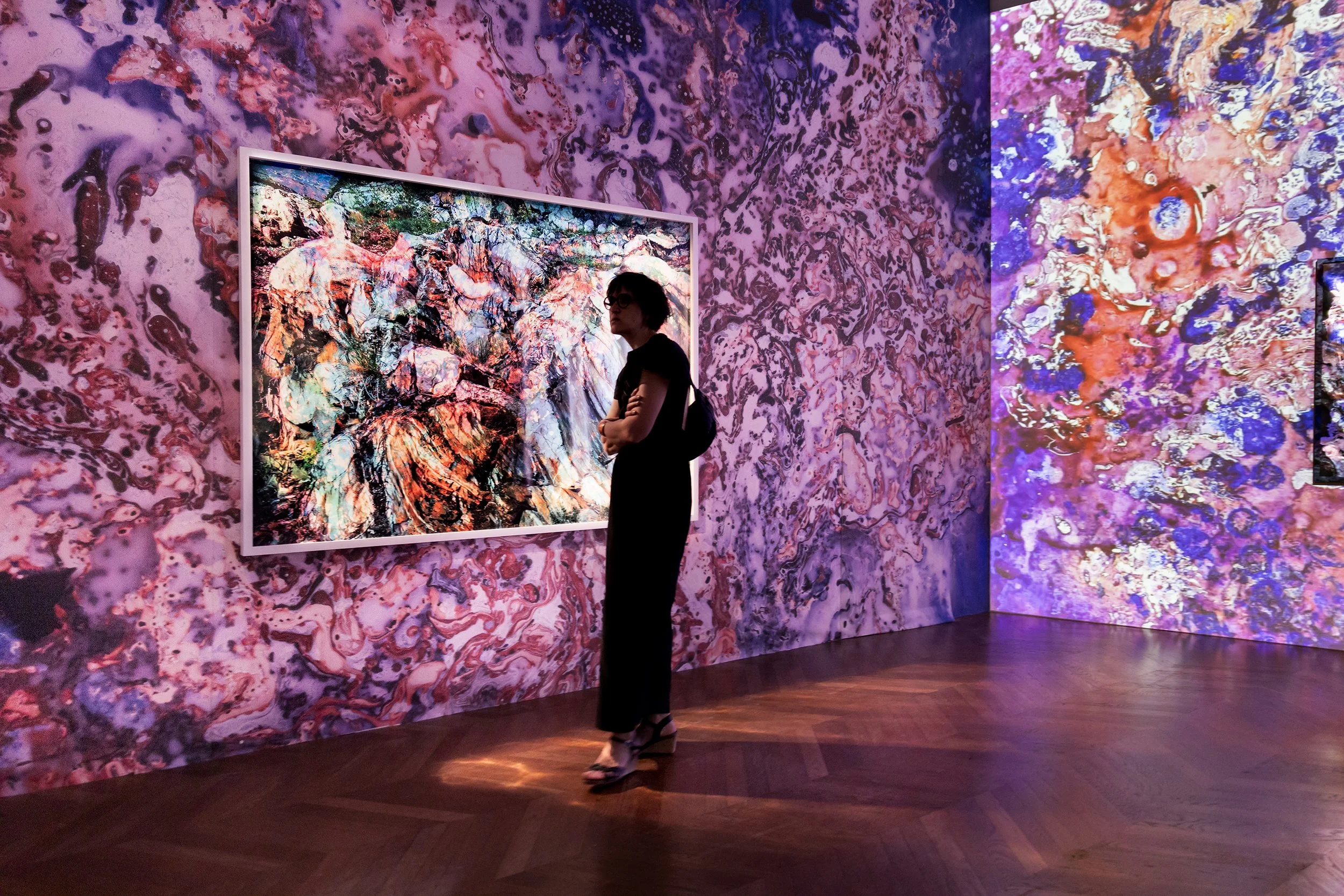
Maya Rochat is a visual artist from the Swiss forest. She is a trained photographer, exploring light in all forms, painting, installation, performance, everyday life objects. She creates art that moves between the lines of nature and printing technologies, of the physical matter and the ephemeral.
Her works are not about “art”. It is about the exploration of human expression and consciousness. Maya aims to inspire new energy into places, and give people inspiration to open up and be creative themselves. Growing up in a kaleidoscope of cultures, her art is a vibrant mash-up of everything that inspires her in this beautifully chaotic human life. Each work is an invitation to activate your imagination and change the way to interpret your reality.
Mike South
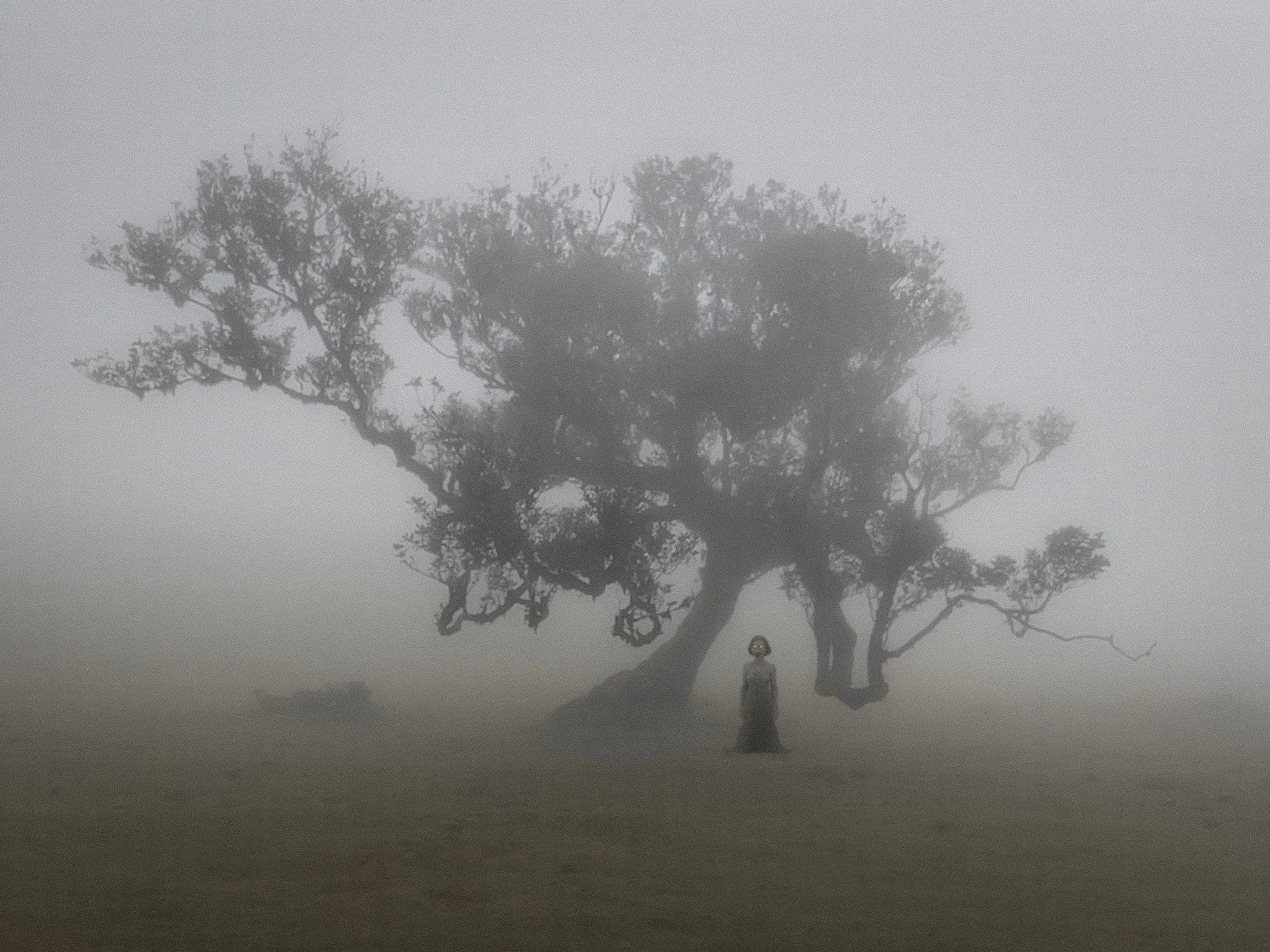
Mike’s work aims to rewrite the stories we tell ourselves. Our fears, memories and experiences, carried for decades. He turns internal experiences into 3D forms and places them into real landscapes using Extended Reality (XR).
By stepping into his own memories and fears, he is forced to confront them like a form of exposure therapy. Mike photographs and films these scenes as if they exist physically, using XR as a traditional camera.
The resulting works are presented as projected films, video sculptures and photographic prints. By making fears and memories tangible, Mike can take ownership of them and hope to inspire others to do the same. Rather than creating individual images, he interested in building worlds that viewers can enter—both physically and psychologically.
Rich Tomos-Simpson
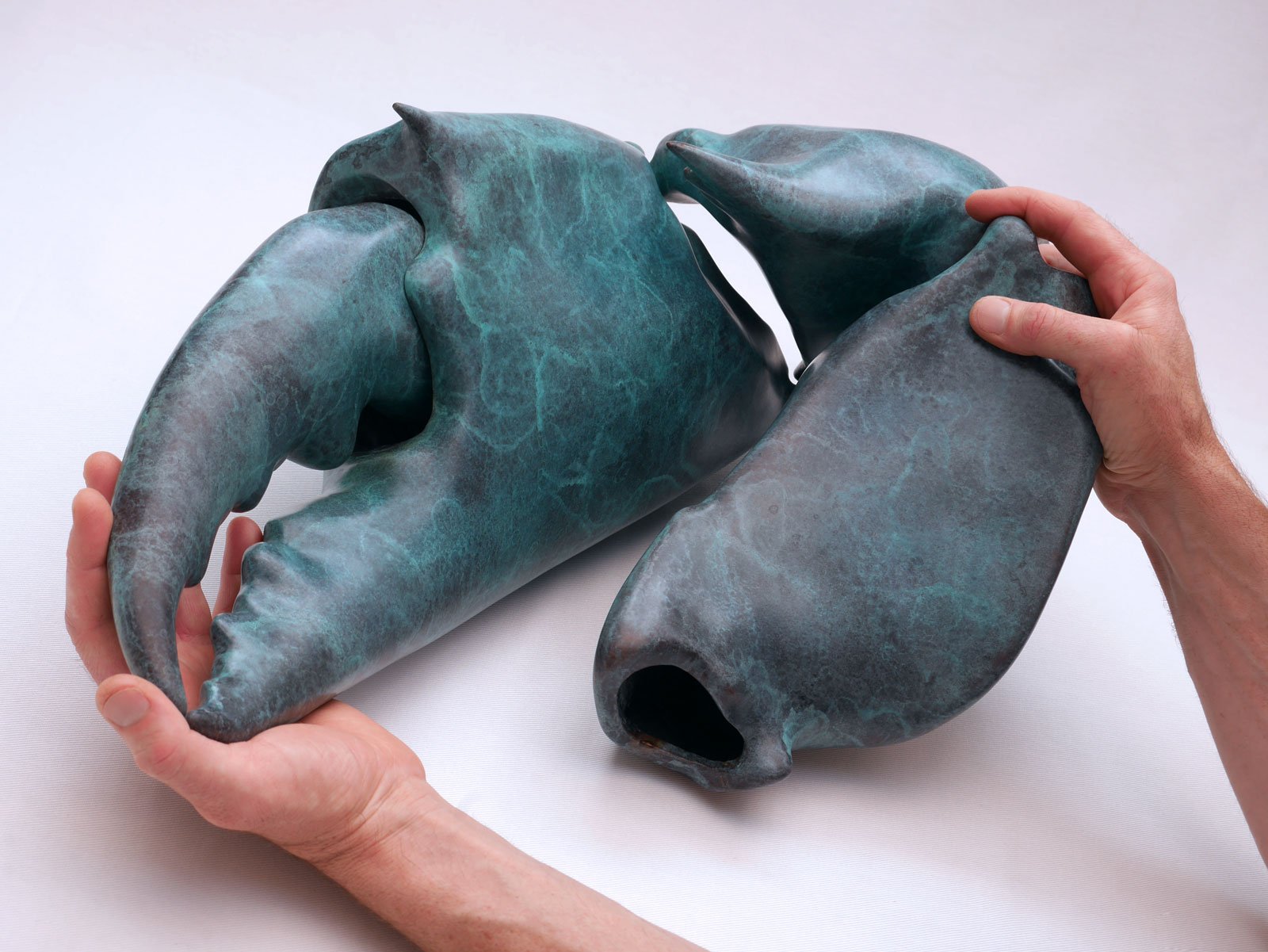
Rich makes work for hands: forms to be physically manipulated and explored. He wants to remove the fear of holding sculpture and the interaction that articulation invites is useful to him.
His subjects, usually complex, organic forms, can be hard to translate into different materials. Rich’s process tries not to compromise them to simplify the work.There are no flat, sacrificial surfaces for his work to rest on. This requires elaborate jigs and processes to achieve – but the result is a long, and to him, joyfully complex undertaking.
Liked this article? Support Seen by becoming a paid member.