
Everything That Must Be Seen at the Venice Biennale 2026
Wrangling the hundreds of things to see during the Venice Biennial into a concrete list requires a Phd, or a really good assistant, or maybe some blind faith in AI. Given that most of us have none of those things, we thought we’d put together a cheat sheet for you. Here are the things you just can’t miss if you’re in Venice between now and November, with a little editorial intro at the start.
The theme for the 61st Venice Biennale was developed by the late Koyo Kouoh, an acclaimed Swiss-Cameroonian curator and the first African woman curator to hold this position. She died suddenly of cancer on May 10, 2025, at age 57, and her team still managed to expertly steward her vision to life “In Minor Keys.” In fact, the whole mood of this year’s Biennale does indeed feel inspired by the notes in a musical score that are always more emotive, those minor keys.
That is for sure what’s happening at the main exhibition on view in the Arsenale - which is huge and moody and does very much feel like a collective score - with 110 artists on view - as it sprawls across the historic complex of the former shipyards and armories.
We were really drawn to a number of works in the show but namely these jumped out at us:
Cauleen Smith's experimental films, textiles, sculpted objects.
Walid Raad’s Postscript to the Arabic Edition.
Carrie Schneider’s photographic installation.
Theo Eshetu’s olive tree Music box - for lack of a better term.
Nick Cave’s bronzes, one inside and another out!
Alice Maher’s vermillion heads rising from the canal.
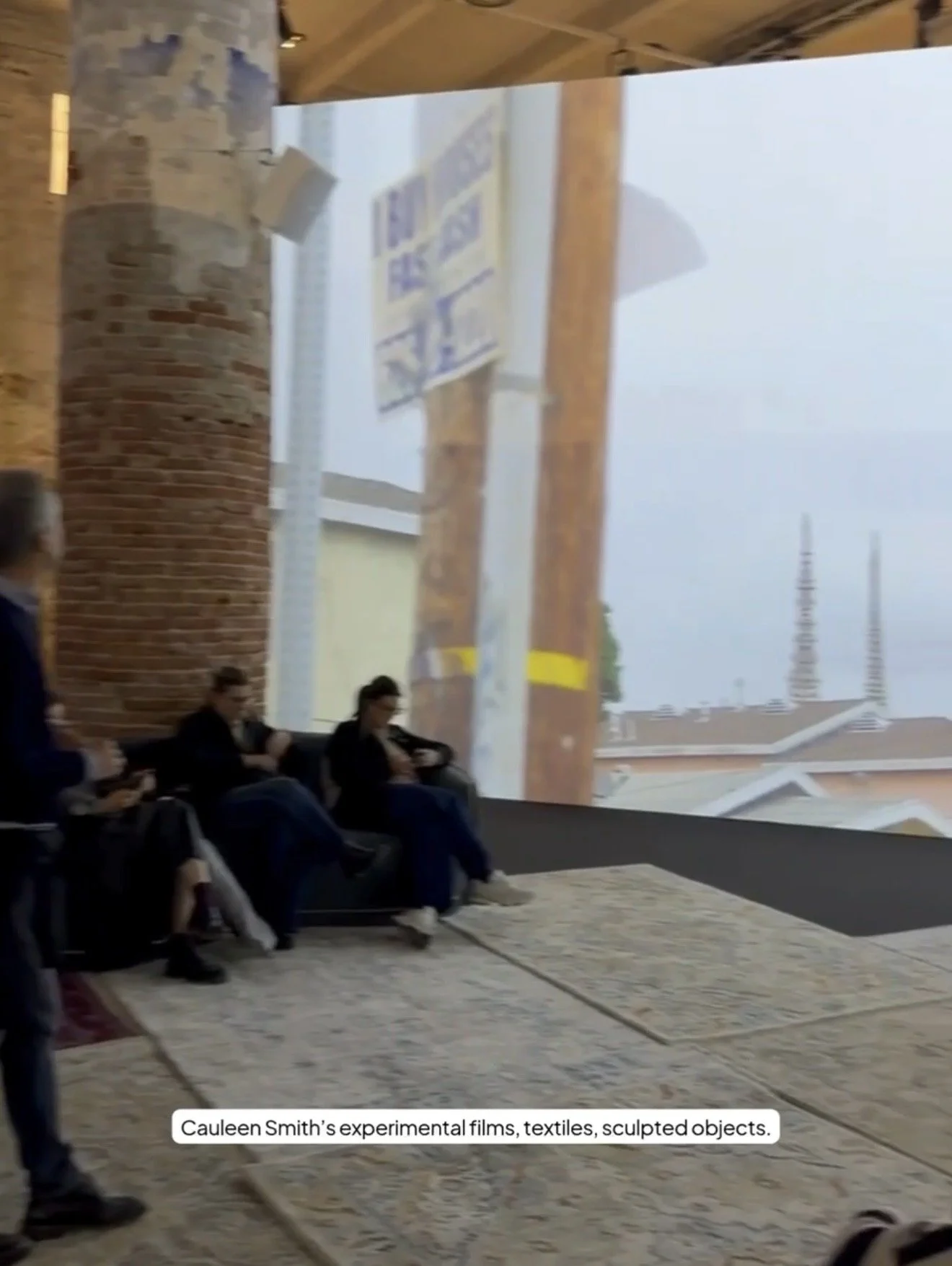
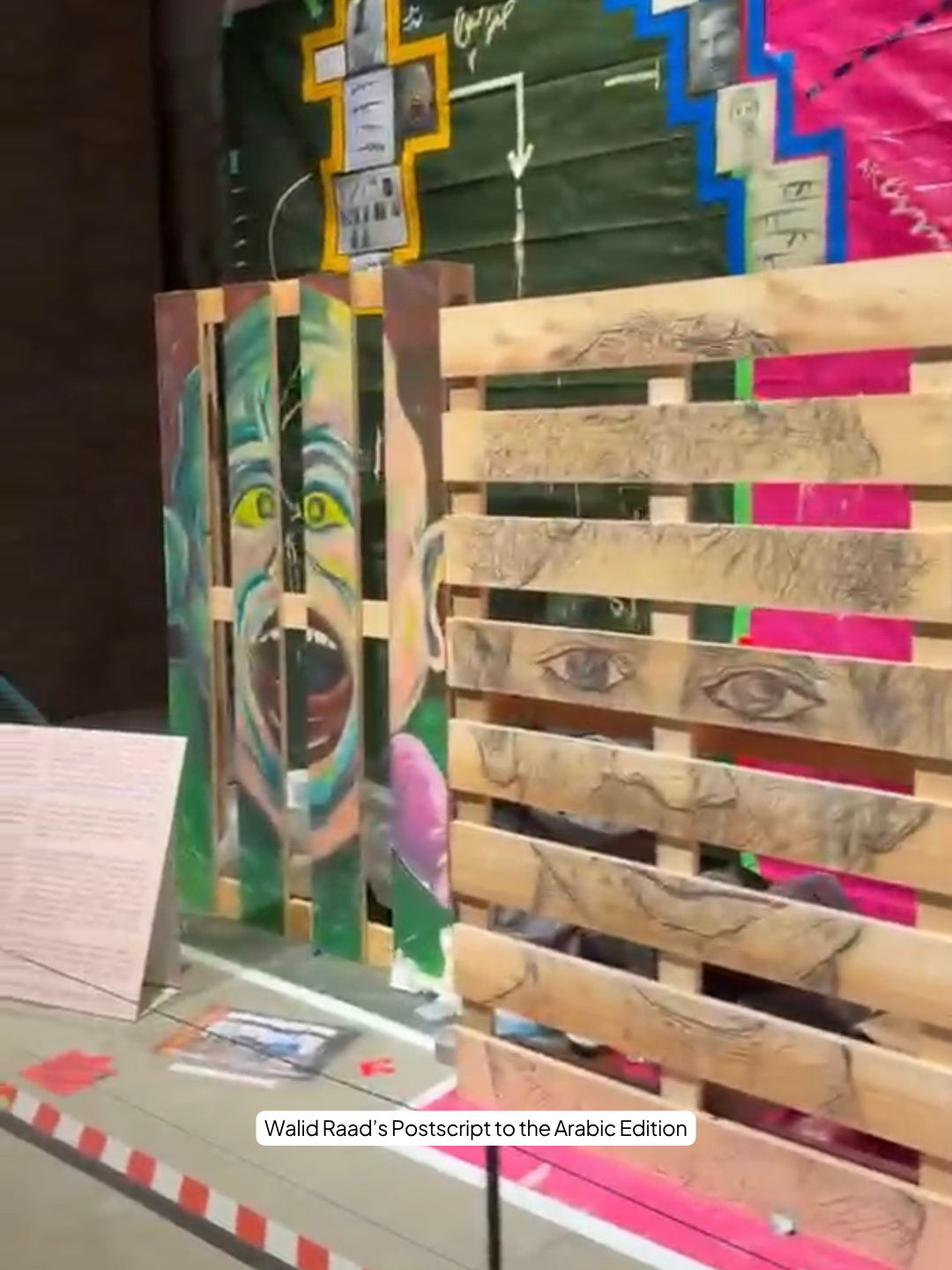
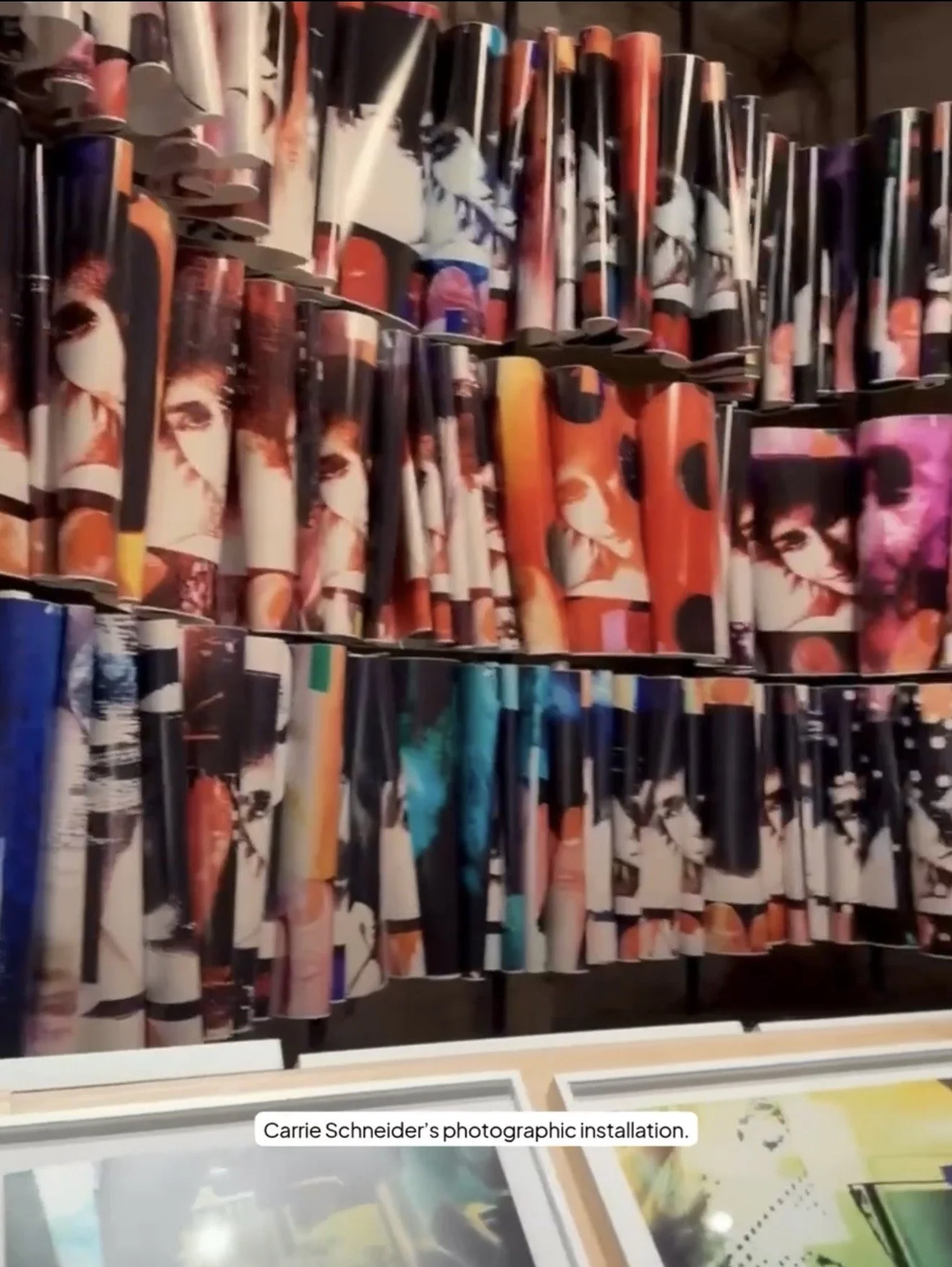
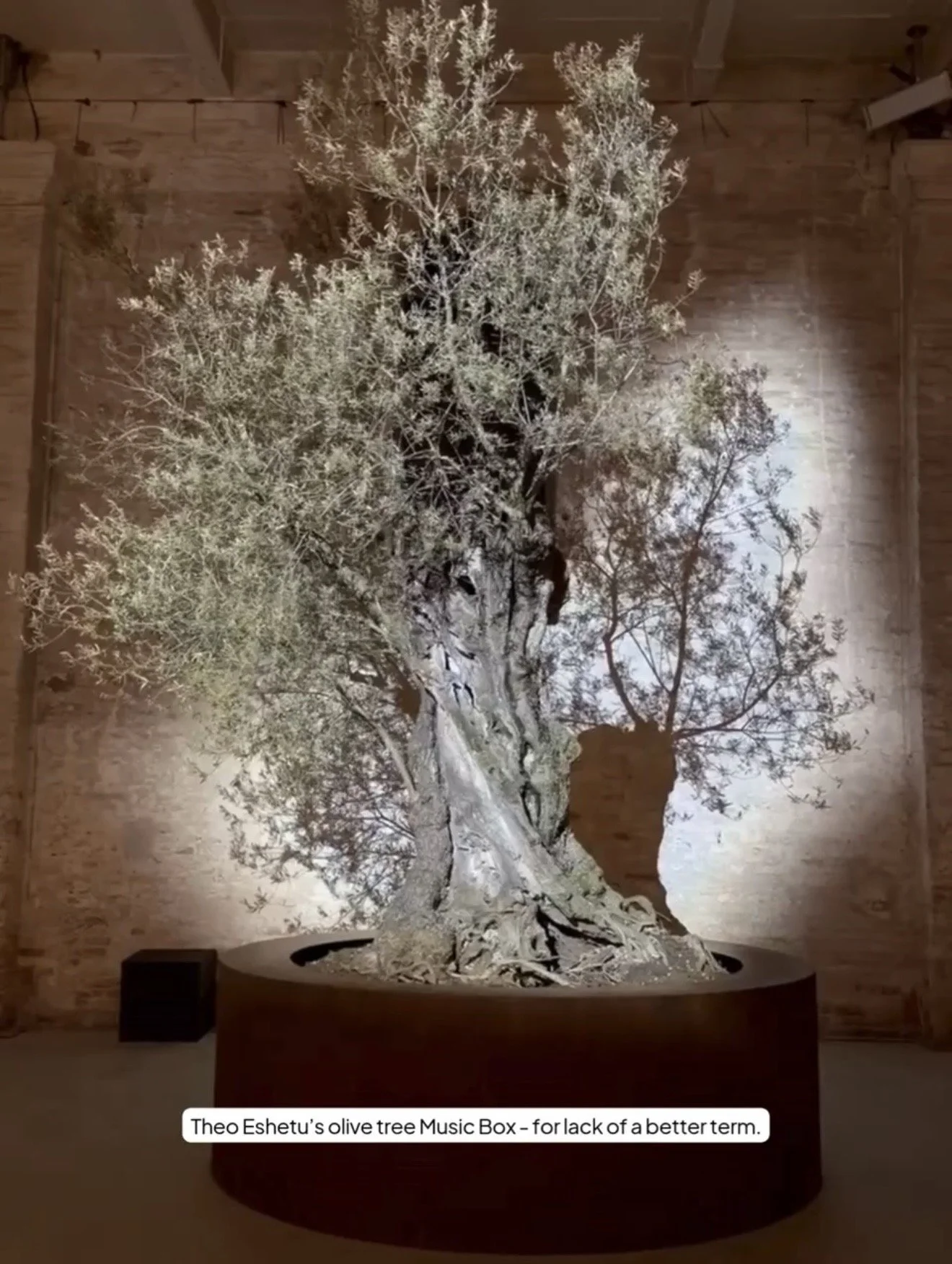
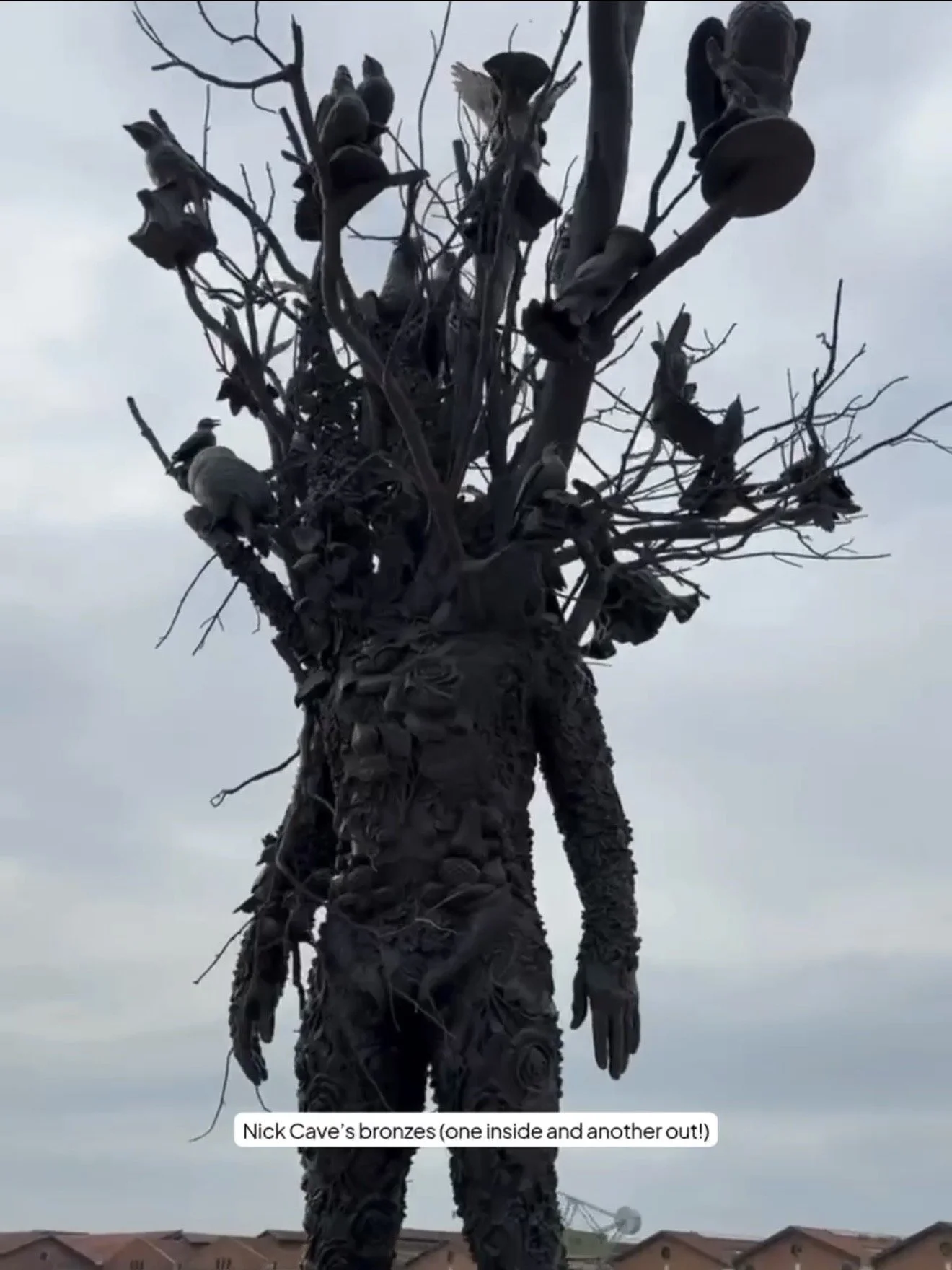
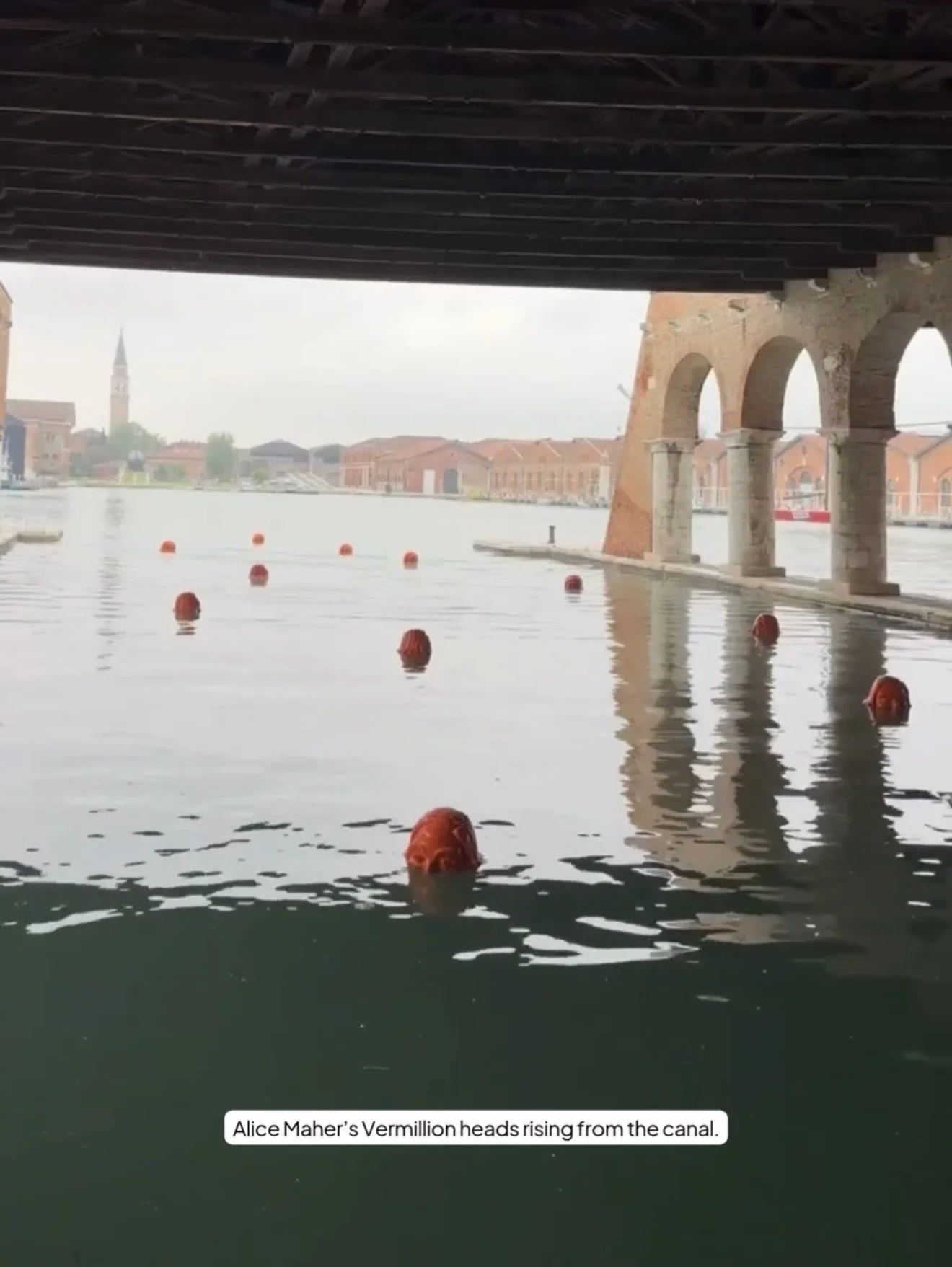
Then over at the Giardini - the historic heart of the Venice Biennale - a park-like setting on the eastern edge of the city that houses 29 permanent national pavilions. The vibe was kind of flat (musical reference very much intended) except for a few Pavillion’s.
This Biennale has been a tough one from almost the word go. First, when the remarkable Kouoh sadly passed away before she could see her vision play out and then with multiple false starts. Artists like Khaled Sabsabi had his invitation revoked (hello Australia!) and then reinstated. Artists have been invited very, very late to represent their countries (hello Alma Allen for America!). And then the jury resigned over Russia's and Israel's disputed participation which means that the traditional Golden Lion will not be awarded this year.
So it’s not been a steady path for this year’s edition. And we went in with low expectations. But, there were three presentations really stood out.
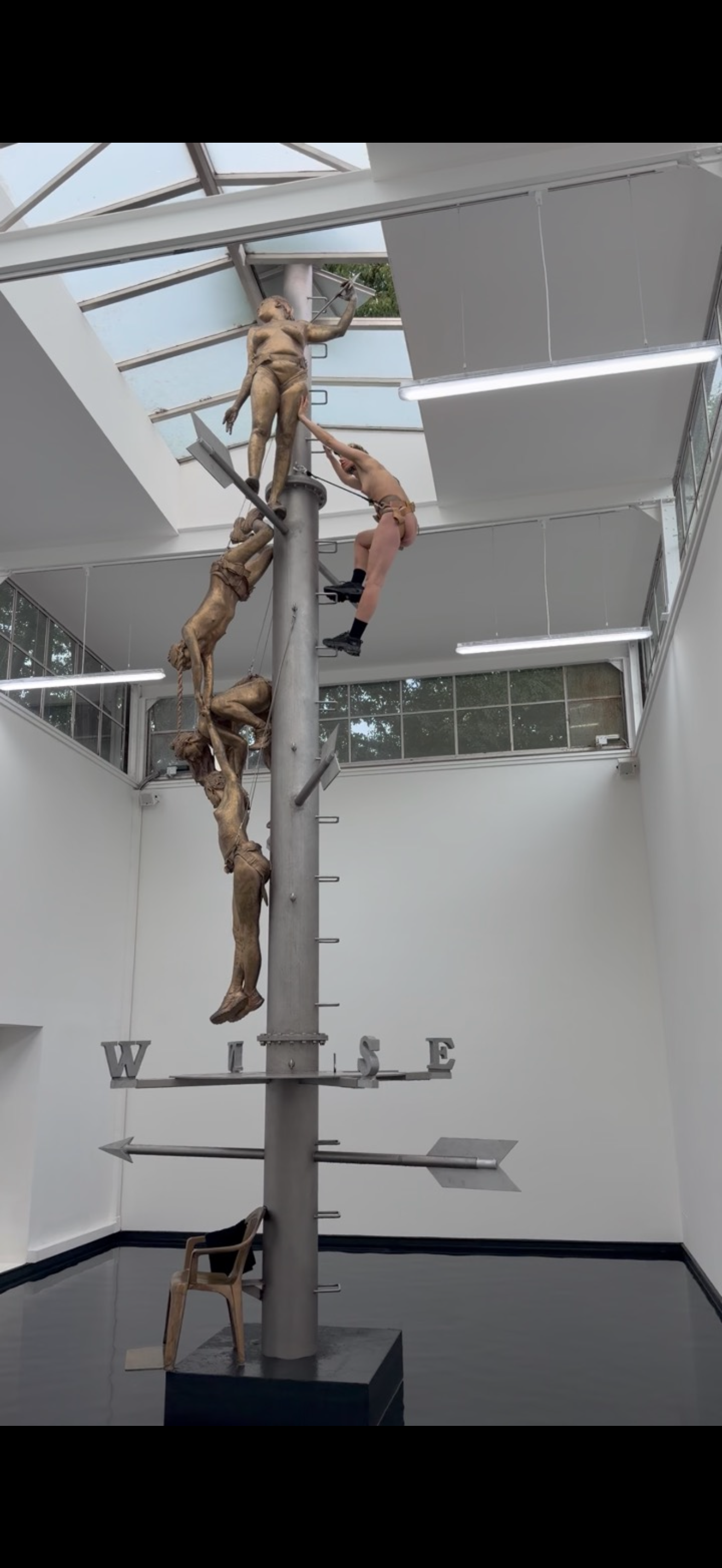
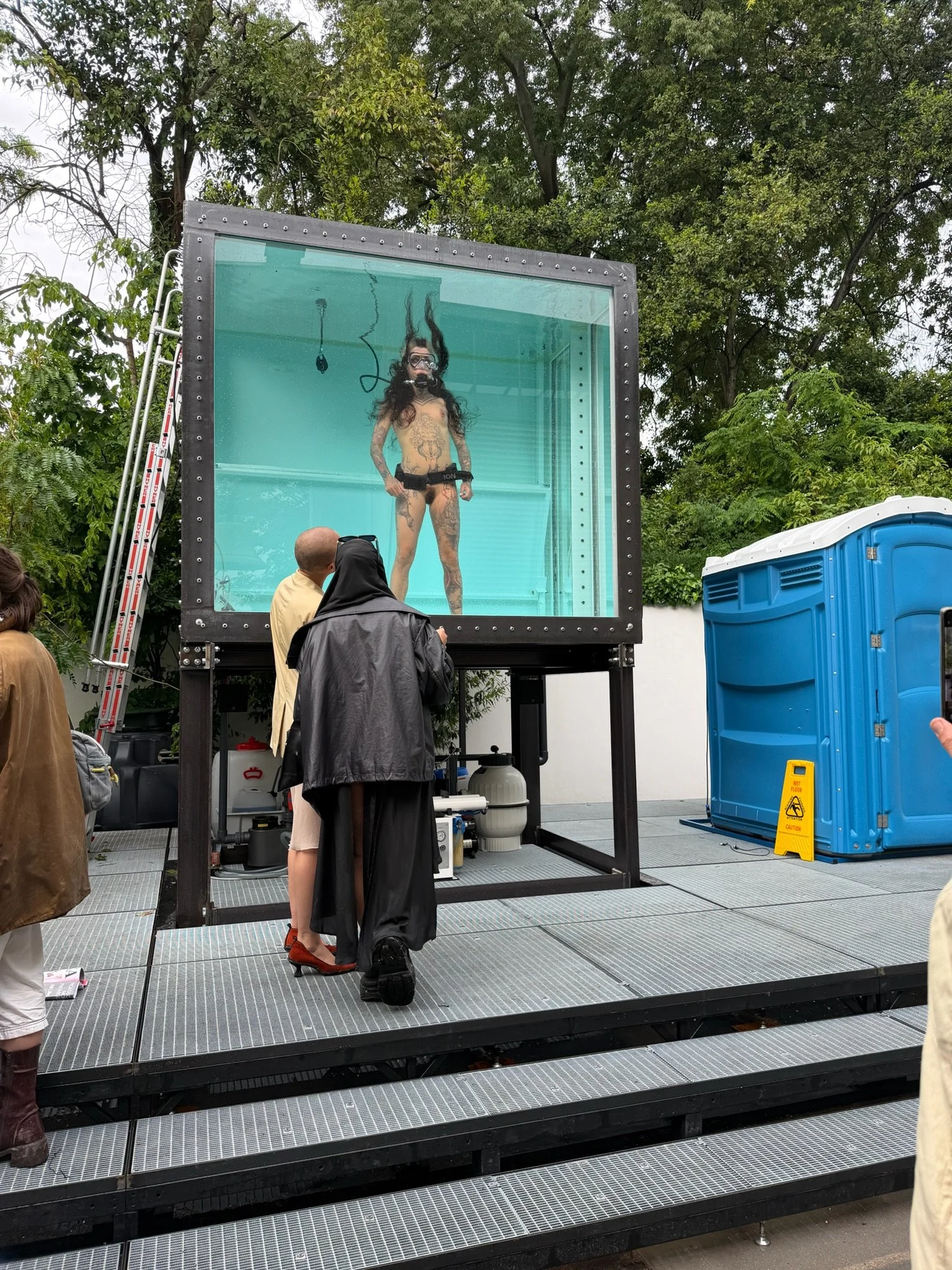
🇦🇹 Austrian Pavilion: Florentina Holzinger
A totally physical, confrontational performance that everyone is talking about and should win the Golden Lion if it were being awarded. Performance art always dares you to sneer until your body betrays you and you feel it anyway. In Seaworld, Holzinger turns spectatorship into complicity: a bell becomes a flesh-and-blood alarm of mortality, while sewage and spectacle expose the waste, violence, and numb rituals we keep conveniently out of sight. It’s dangerous, grotesque, intelligent work that forces us to confront not just what we consume, but the thoughtless ways we live. I will do a longer reel and article on this when I can.
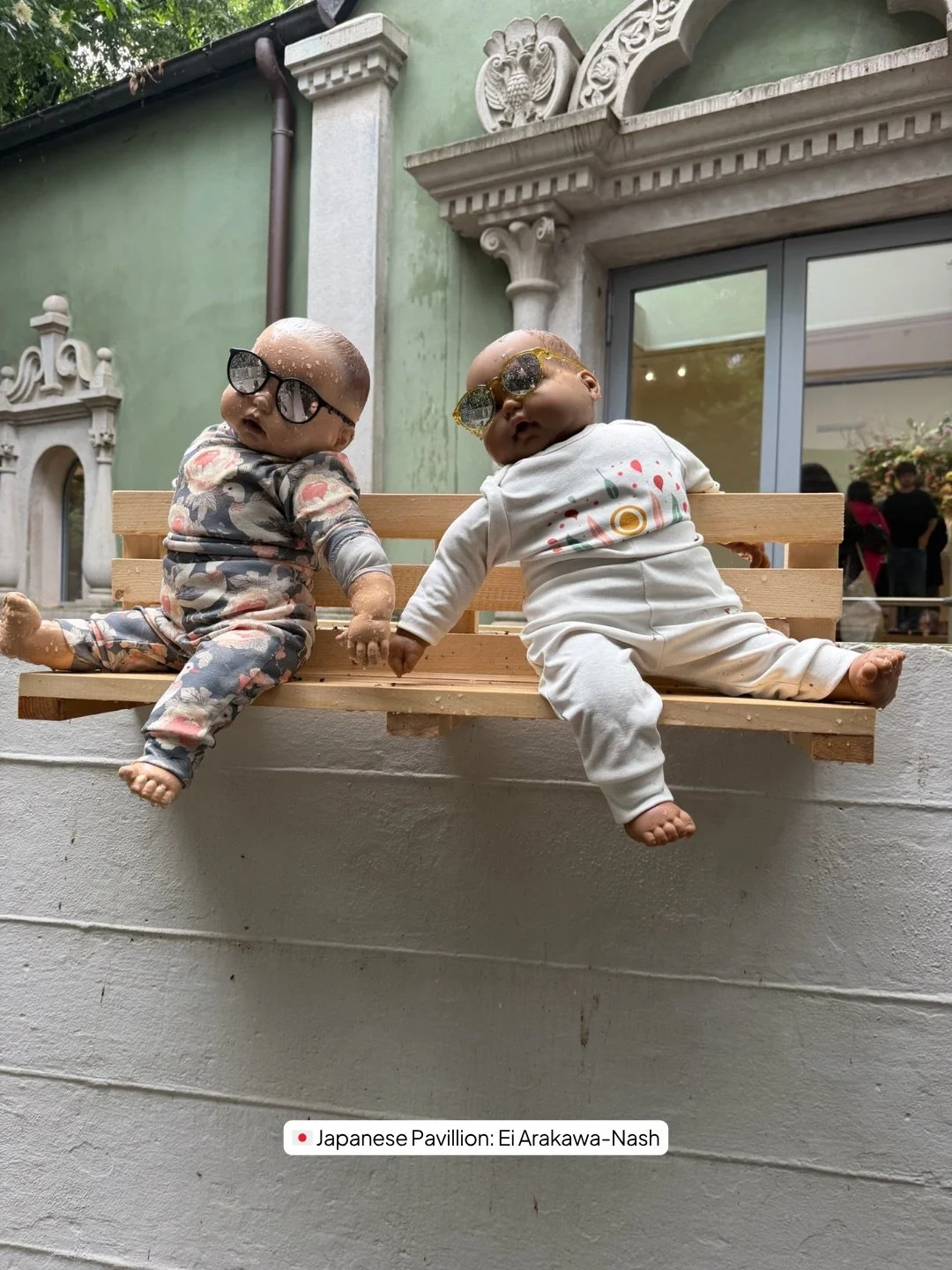
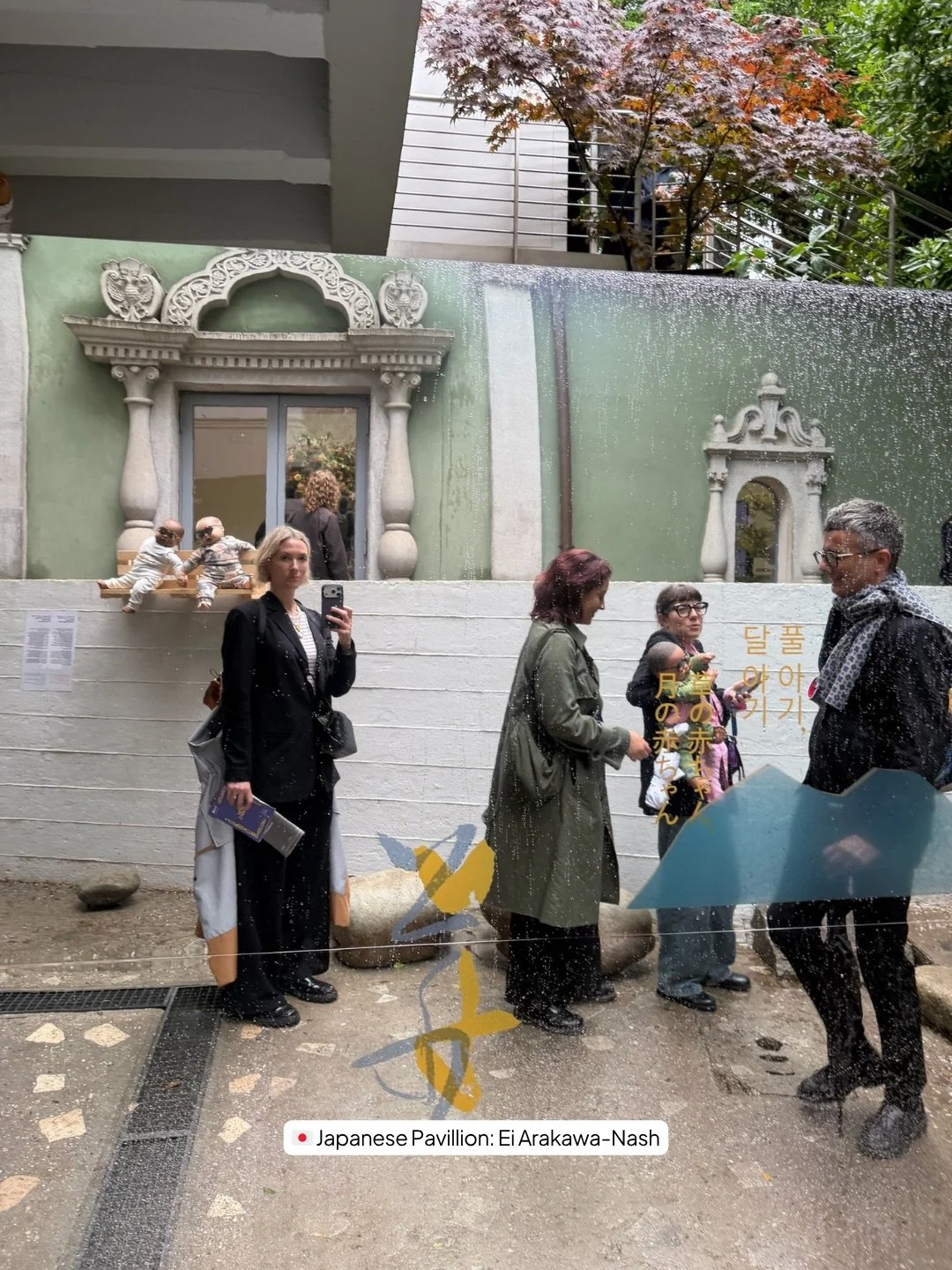
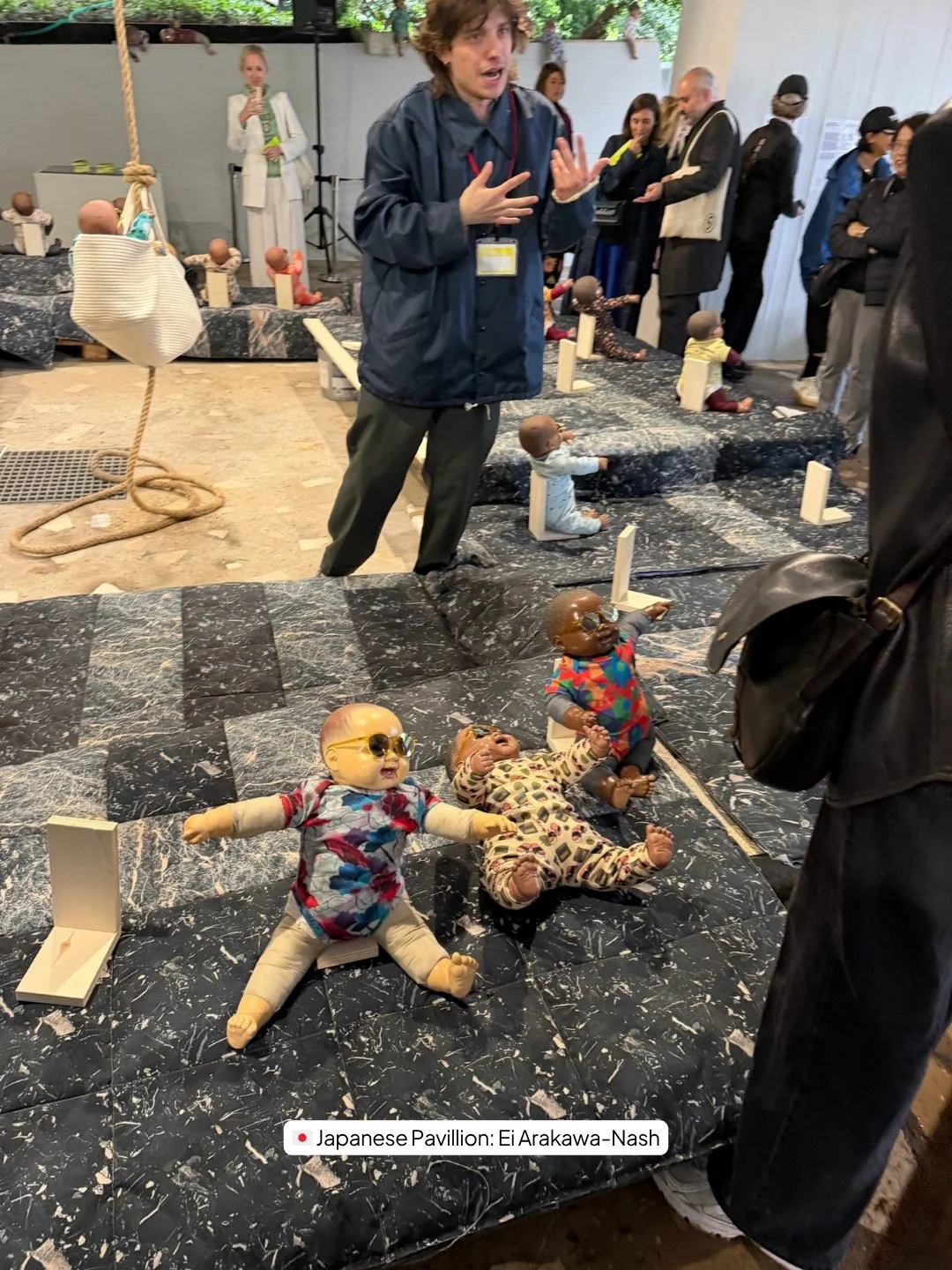
🇯🇵 Japanese Pavillion: Ei Arakawa-Nash
At its core, the pavilion is about parenthood and diasporic identity, turning care into something shared between strangers. It’s another performance piece but in this presentation visitors are invited to “adopt” baby dolls, change their diapers and look after them, with each act unlocking a poem connected to the doll’s birthday. The work gently blurs the line between the personal and the political, asking how identity, memory, and belonging get passed down, carried, and cared for across generations. And it was just so lovely to see grown up’s enacting care - aka looking after something and playing “house.” We don’t see it enough.
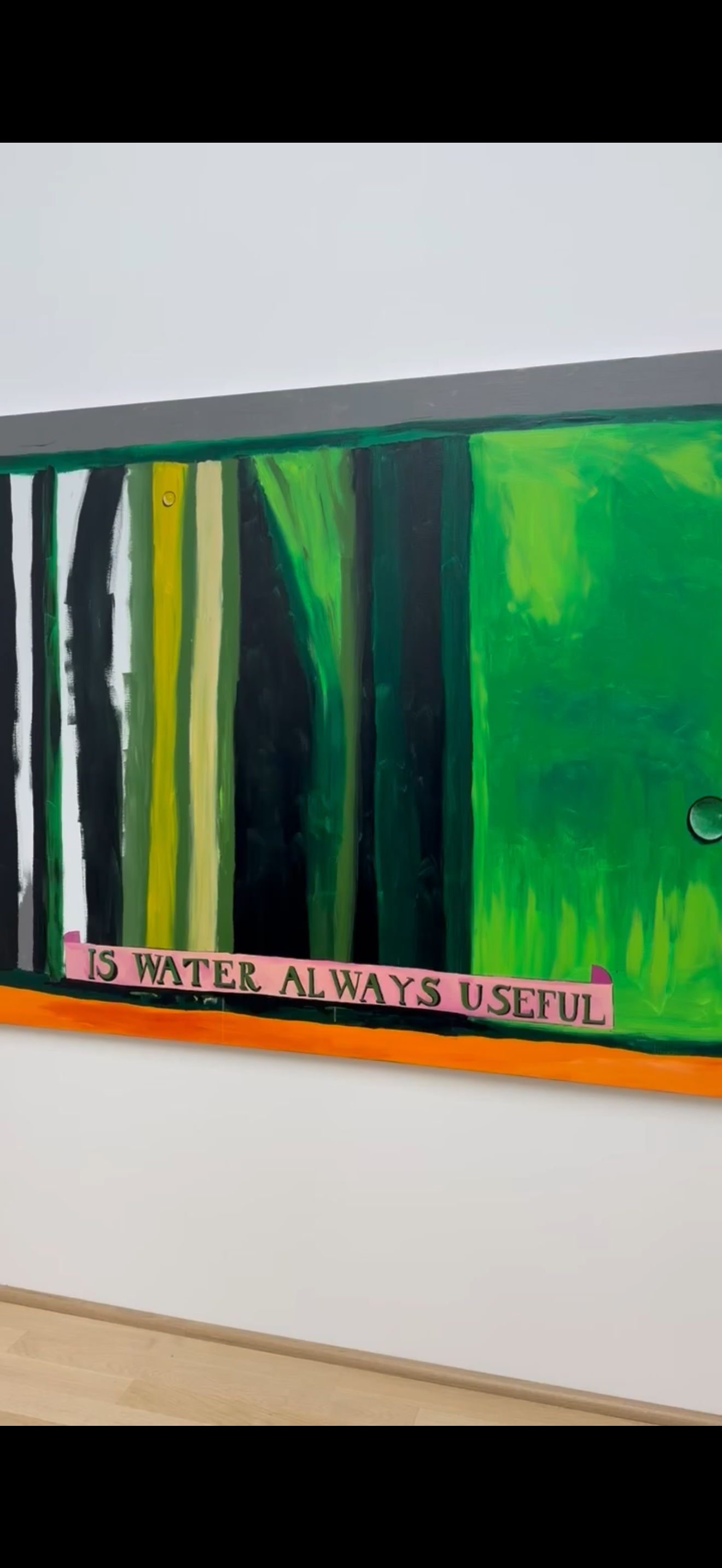
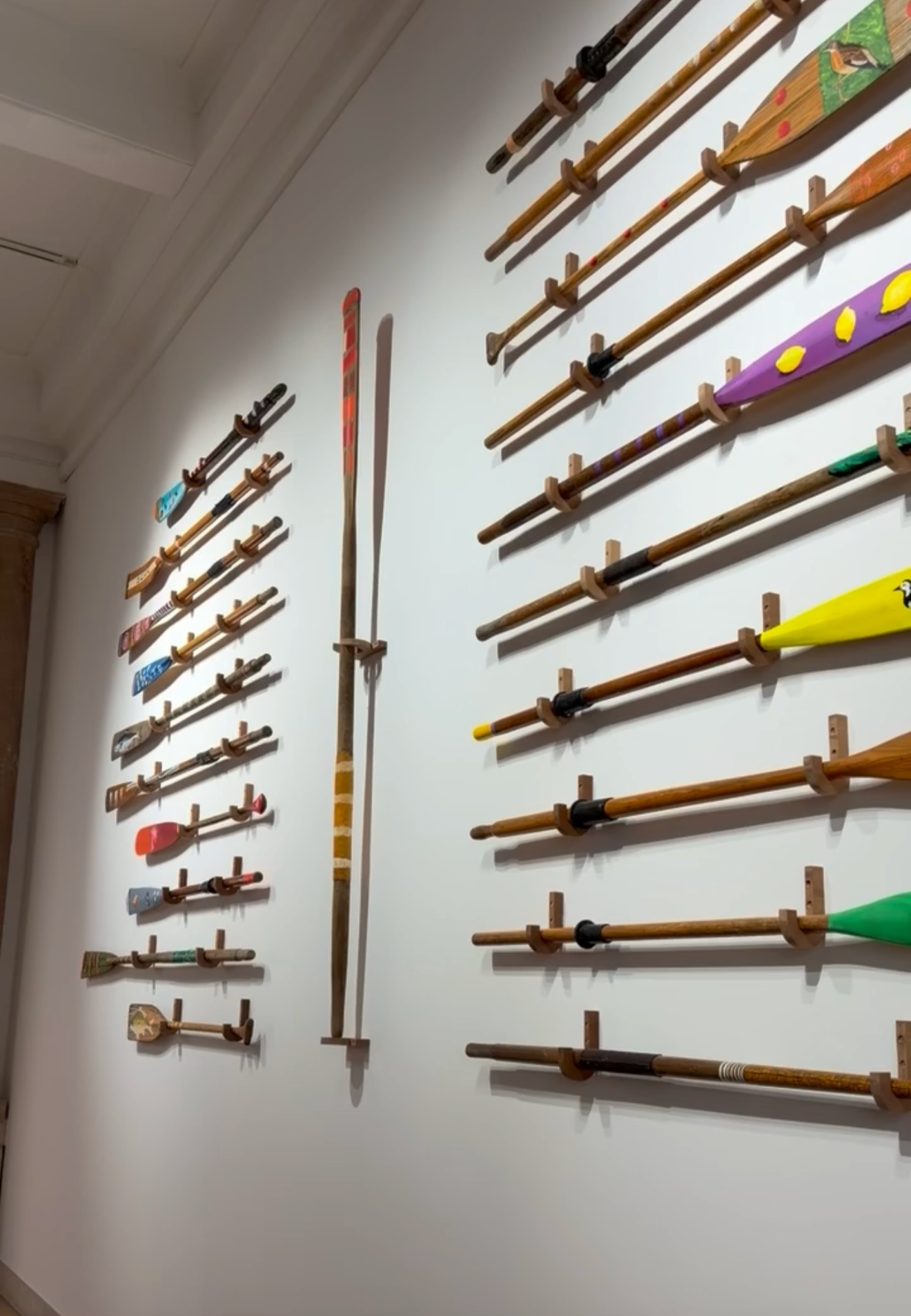
🇬🇧 British Pavillion: Lubaina Himid
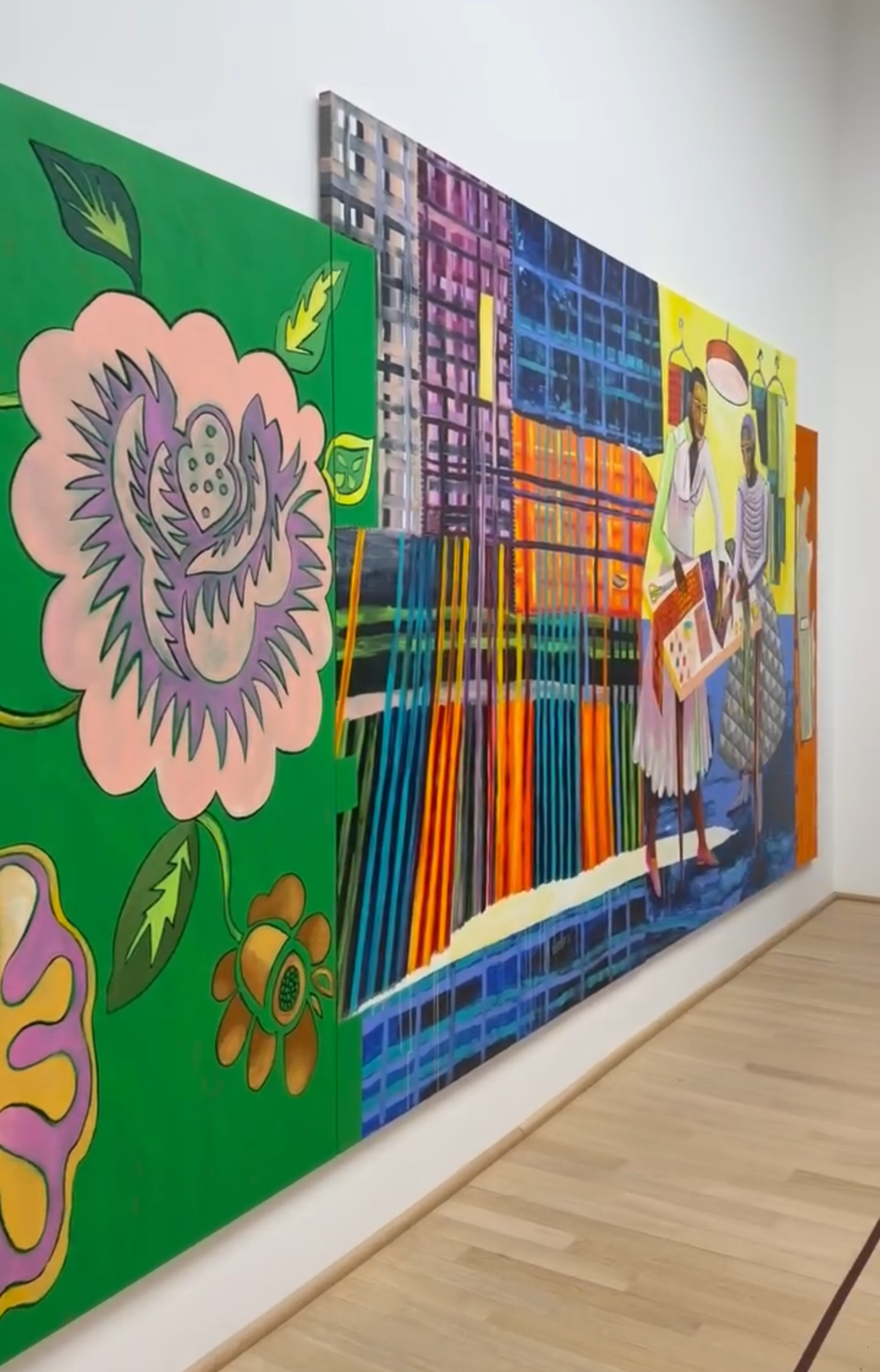
We are fans of Himid’s work so went to this presentation wanting to love it. And we did. In her subtle, but powerful way, Himid reminds us time and time again of a displaced feeling that is so hard to name if your roots are not in the country in which you live. Across monumental paintings, a sound scape, and sculptures she is asking, whether we can ever truly belong.
Okay. Enough of the editorialising. Here’s our “can’t miss while in Venice list.”
🟩 OFFICIAL BIENNALE
The Biennale takes place from 9 May to 22 November 2026 and spans across two sites.
Giardini della Biennale, Sestiere Castello, 30122
This is the historic national pavilion park and the geopolitical art olympic theatre of the Biennale, where most countries stage their “statement” exhibitions.
Arsenale, Campo della Tana 2169/F, 30122
This is the curated exhibition that spans across a vast former shipyard. This is where the main thesis of the Biennale unfolds.
🔹 Pavilions Of Note in The Giardini
🇬🇧 British Pavilion - Lubaina Himid curated by Ese Onojeruo
Himid’s work often reframes overlooked histories through painting and installation.
🇯🇵 Japanese Pavilion - Ei Arakawa-Nash
Participatory work, expect unpredictability and audience involvement and baby dolls. Yes, you heard that right. Baby dolls.
🇩🇰 Danish Pavilion - Maja Malou Lyse
Conceptual and provocative, blends pornography, science, and speculative futures around fertility.
🇦🇹 Austrian Pavilion - Florentina Holzinger
Physical, confrontational performance. Holzinger’s work pushes bodily limits and spectacle.
Manuel Mathieu
📍 Arsenale & Giardini
9 May – 22 Nov 2026
Multidisciplinary work (including scent) exploring memory, violence, and spiritual inheritance.
🔹 Official Collateral Events
🇻🇦 Holy See Pavilion
📍 Giudecca, Fondamenta S. Eufemia 673
Usually one of the more contemplative pavilions, leans into spirituality, perception, and sensory experience.
🇮🇪 Irish Pavilion — Isabel Nolan
📍 Arsenale, Campo de la Tana 2169
Lyrical, materially rich installation exploring dream states and how humans impose order on chaos.
🇪🇪 Estonian Pavilion: Merike Estna
📍Calle San Domenico 1285, Venice
This installation includes a monumental painting composed of 22 canvases produced on-site, alongside hand-painted ceramic floors that will change as the Biennial goes on. Estna will paint in public view throughout. "The House of Leaking Sky" focuses on female artist identity, motherhood, and labor, transforming the pavilion into a living, evolving artwork rather than a static exhibition.
🇰🇿 Kazakhstani Pavilion: Qoñyr: The Archive of Silence” at Venice Biennale curated by artist-curator Syrlybek Bekbota
📍 Naval Museum, Castello 2148
Bringing together nine artists the exhibition unfolds as a slow, sensory journey across six interconnected rooms at the Museo Storico Navale, which has hosted Kazakhstan’s pavilion since 2022.
Still Joy — From Ukraine into the World
📍 Palazzo Contarini Polignac, Dorsoduro 874
9 May – 1 Aug 2026
Focuses on joy as resistance. intimate testimonies from Ukrainian artists and communities.
🟨 OFF-SITE COLLATERAL EXHIBITIONS
Anish Kapoor — Palazzo Manfrin
📍 Cannaregio 2384
📅 Exhibition: 6 May – Aug 2026
Major institutional-scale presentation. Kapoor revisits 50 years of sculptural and architectural thinking.
Matthew Wong — Interiors
📍 Palazzo Tiepolo Passi, San Polo 2765
6 May – 1 Nov 2026
A great show by a great painter. Rare works exploring interior psychological space, emotionally intense.
Berggruen Arts & Culture (Palazzo Diedo)
📍 Cannaregio 2386
4 May – 22 Nov
Think art + tech theory—“Protocol Art” framing how systems shape culture. Strange Rules & Ceal Floyer: Unfinished. Hans Ulrich Obrist has his hands in this.
Arch Hades — Return | Ritorno
📍 Scoletta Battioro e Tiraoro, Dorsoduro 2646
4 May - 1 November
Immersive, atmospheric installation combining painting, sculpture, and sound—very mood-driven.
Art21 — Tide of Returns
📍 Ocean Space, Castello 5069
4 May - 11 October
An immersive exhibition by the Repatriates Collective exploring repatriation as an ongoing process of repair and cultural survival
Arthur Jafa x Richard Prince — Fondazione Prada
📍Calle Corner, 2215, 30135 Venezia VE, Italy
4 May - 23 Nov
Urgent, film-based work interrogating Black identity and image culture by Jafa. How this works with Richard Prince’s - ultimate “old white guy vibes” - we don’t know. But there’s a debate playing out here about the difference between appropriation vs. plagiarism. And you know which one is which…right?
Michael Armitage — Palazzo Grassi Pinault Collection
📍Campo San Samuele, 3231, 30124 Venezia VE, Italy
May - 1 October
Lush, politically charged painting that bridges East African narratives with Western art history.
Lorna Simpson — Punta della Dogana Pinault Collection
📍Dorsoduro, 2, 30123 Venezia VE, Italy
Poetic, image-based work dealing with identity, memory, and representation. Represents the most significant presentation of her work in Europe in more than a decade, focusing on her painting practice.
Shirin Neshat — film, Palazzo Marin
📍Fondamenta Narisi, 2541, 30124
May - September 6, 2026
A new body of work that extends Neshat’s longstanding exploration of exile, fractured identity and power.
Lee Ufan — SMAC Venice
📍Piazza San Marco 105
Through 22 November
The exhibition traces the evolution of Ufan’s iconic visual language with works ranging from new and historical paintings to large-scale installations and a new site-specific commission.
Sanya Kantarovsky — Istituto Veneto
📍 Palazzo Loredan, Campo Santo Stefano 2945
Istituto Veneto di Scienze, Lettere ed Arti
Through 22 November
Showcasing the artist's interdisciplinary practice with site-specific interventions in a unique dialogue with the architecture of Palazzo Loredan. The exhibition includes paintings and a sculpture created in collaboration with a Murano glass studio.
Strange Rules: Berggruen Arts & Culture
📍Palazzo Diedo, Fondamenta Diedo, Cannaregio 2386, Venice
Through 22 November
A new interdisciplinary project conceived by Mat Dryhurst, Holly Herndon and Hans Ulrich Obrist, and curated in collaboration with Adriana Rispoli. Strange Rules introduces the concept of Protocol Art, a practice that engages with the underlying rules that dictate how culture is produced, distributed, and perceived in a digital age.
We Thought We Were Alone: Koen Vanmechelen
📍Palazzo Rota Ivancich, Venice
Through 22 November
From Murano glass to Carrara marble, from laboratories to landscapes, Vanmechelen’s practice moves across materials and geographies.