

A British Photographer’s Unfiltered Love Affair with the American West
What happens when a British photographer falls in love with American culture—yet sees right through it? Enter Jane Hilton, a documentarian who has spent 25 years capturing the essence of Americana, with a particular focus on the American West.
From working girls in Nevada to wedding couples in Las Vegas, from modern-day cowboys to Native American communities, Hilton’s lens does more than romanticize; it challenges preconceptions, offering a raw, complex, and deeply human perspective on a land often defined by myth.
Dead Eagle Trail: The Cowboy Behind the Myth
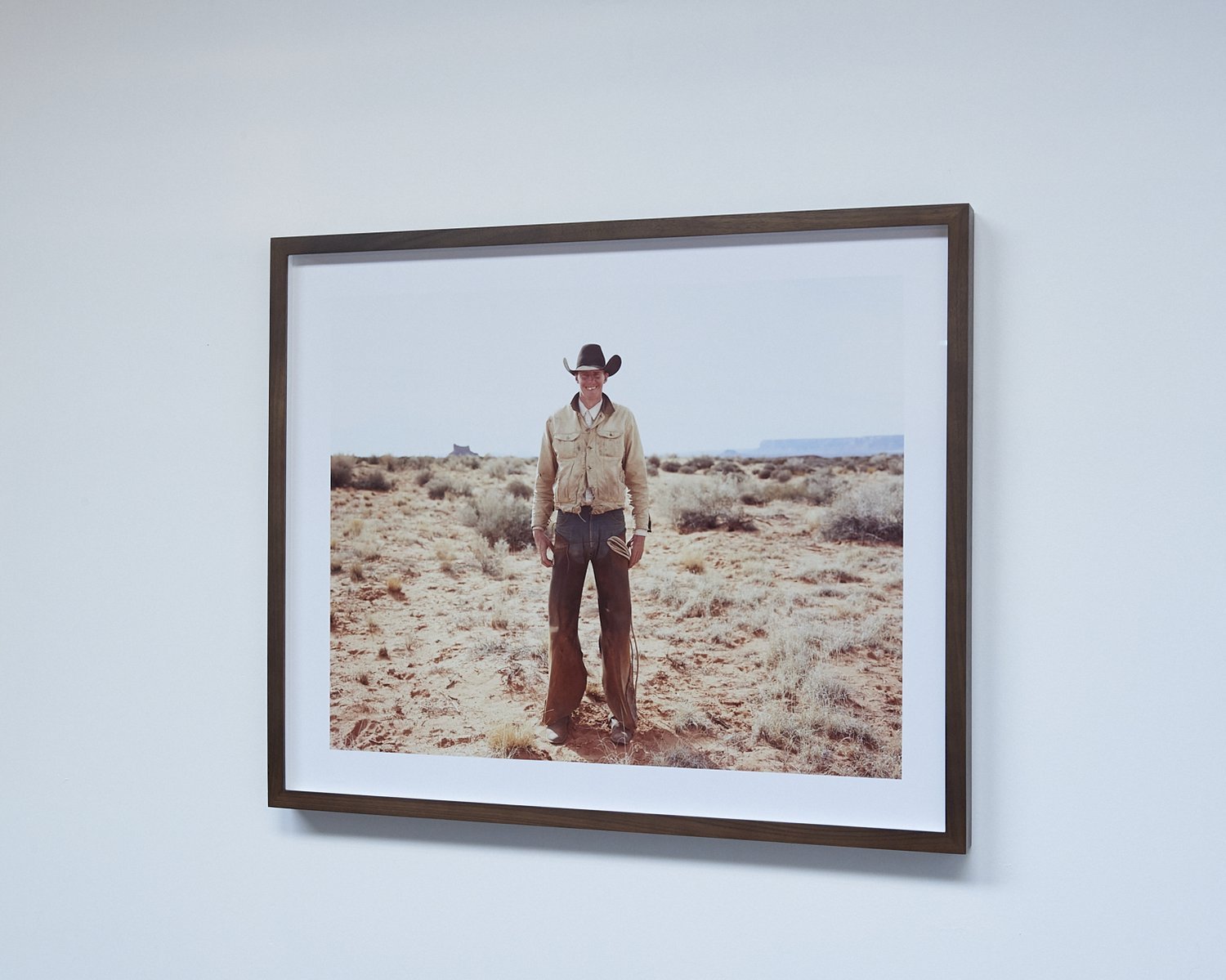
In her celebrated series Dead Eagle Trail, Hilton captures cowboys at home, surrounded by the relics of Western iconography—broncos, guns, boots, and open landscapes. But her portraits reveal more than just nostalgia; they show the modern cowboy as he really is.
"Songs, books, and films have long romanticized the cowboy as an enigmatic hero—a man and his horse, alone on the range. In Dead Eagle Trail, Jane Hilton gives us a glimpse of the man behind the myth, not busting broncos, but seated on the edge of his bed, in spartan rooms, in living rooms crammed full of memorabilia, or watching TV next to his gun safe."
— Time Magazine
American Cowboy: A Landscape of Survival
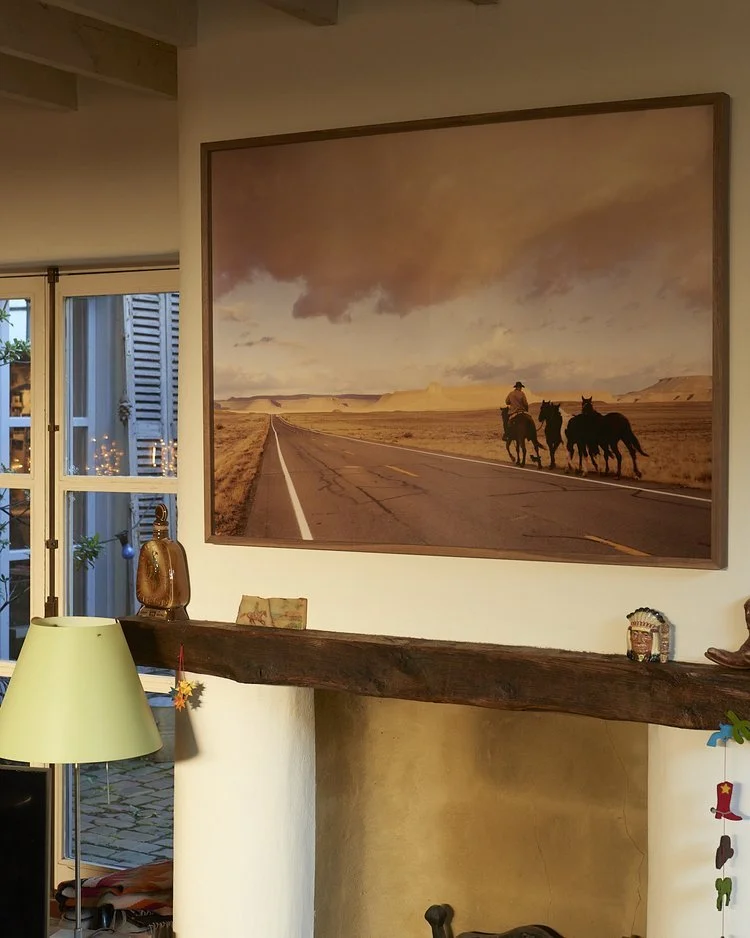
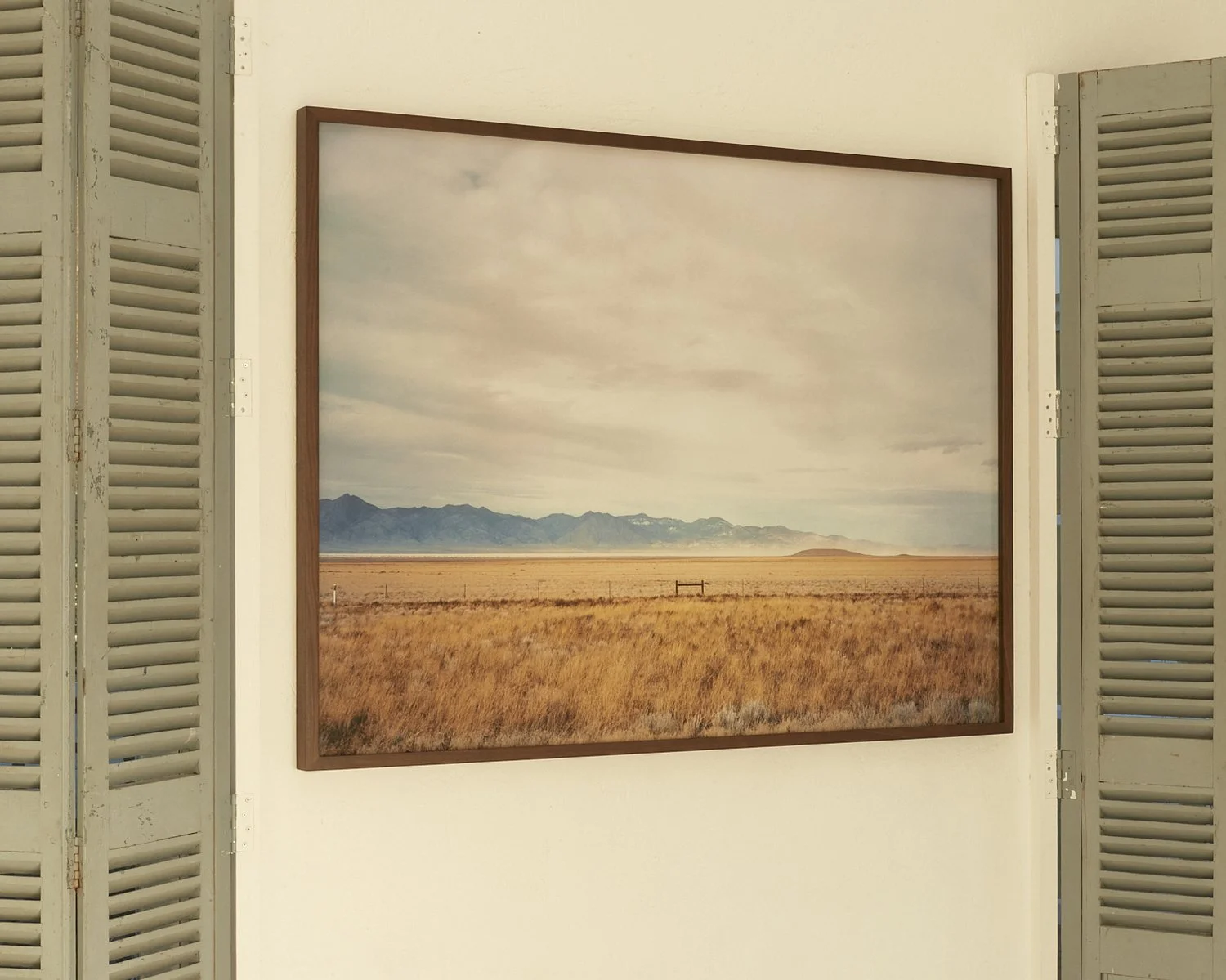
Hilton’s series American Cowboy takes this vision a step further. Shooting in color film with a 4x5” view camera, her images capture the vast plains, endless highways, and dusty earth tones of the West with startling richness.
Yet Hilton is neither nostalgic nor naive. She documents not only the grandeur of the cowboy’s existence but also the encroaching forces of change.
In Big Chief Gas Station, New Mexico, a shuttered Native American business stands as a ghostly memorial to the cultures displaced by westward expansion. It also speaks to the declining economic prospects of both Native tribes and ranchers alike. As Hilton writes in Dead Eagle Trail, “Real cowboys will not disappear, but every generation produces fewer and fewer of them.”

Jane Hilton: Home On The Range
Curated By Carrie Scott


Jane Hilton: A Life Behind the Lens
Born in England, Jane Hilton initially studied Music and Visual Art at Lancaster University, before shifting her focus to photography. Her love affair with the American West began on her first trip to Arizona in 1988, where she found herself drawn to the landscapes and characters she had grown up watching in John Wayne and Gary Cooper movies.
"I grew up with Hollywood cowboy movies on Sunday afternoons with my dad. Those gunslinging cowboys defending their land and women folk, all played out in the spectacular scenery of the American West—it seemed a long way from suburban England."
— Jane Hilton, The Telegraph (2010)
Her work has received international recognition, with her portrait of cowboy Pate Meinzer earning a nomination for the Taylor Wessing Photographic Portrait Prize (2009) and later published as a book in 2010 (Schilt, Amsterdam).
Hilton’s photographs have been exhibited extensively throughout Europe and the United States, including at Photo London (2015). Her work is part of the permanent collection of the Philadelphia Museum of Art, and she is a regular contributor to The Sunday Times Magazine and The Telegraph Magazine. In 2013, she was awarded an Honorary Fellowship by the Royal Photographic Society.
A Vision That Goes Beyond the Surface
Hilton’s America is both beautiful and brutal, shaped by its own myths, contradictions, and hard truths. Whether photographing ranchers, sex workers, or the roadside relics of a fading frontier, she brings a unique outsider’s eye—one that is deeply fascinated, yet refreshingly unsentimental.
For 25 years, she has documented a country in transition, revealing an America that is as raw, resilient, and enigmatic as the people who call it home.




Beyond the Cowboy: Brothels, Weddings, and America’s Hidden Corners
Hilton’s fascination with American identity extends far beyond cowboys. She has spent 15 years photographing and filming Nevada’s legalized brothels, capturing the intimate, often unseen lives of working girls and madams. Her book of brothel portraits, Precious (Schilt, 2013), offers a rare, unvarnished look at this world. She also produced the BBC’s ten-part documentary series Love for Sale, offering a humanized, unsensationalized portrait of sex work in Nevada.
Hilton’s documentation of Las Vegas wedding chapels further explores America’s unique rituals, capturing the juxtaposition of spectacle, love, and fleeting commitment that defines the city’s famous drive-thru nuptials.


